Skip to content
Divot&Draw

The Sticks · Golf Clubs

Vokey Wedge Alternatives

Vokey sells two things: six sole grinds to fit your attack angle, and a patented groove-cutting process. Seven wedges ranked by which of the two you actually need.

By Stephen V.Updated How we rank
#ad

We earn a commission when you buy through our Amazon links, at no extra cost to you. It never changes our rankings — and we'll tell you when the cheaper ball or club is the better buy. How this works.

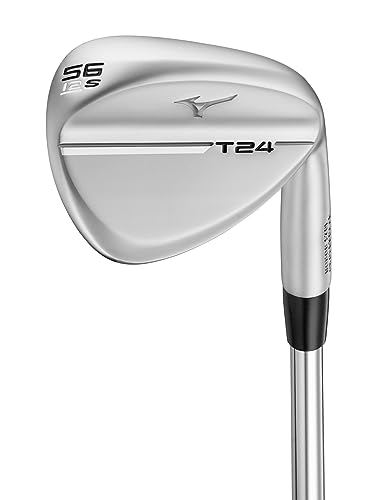
Mizuno Mizuno T24 Soft White Satin Wedge (58°, 10 Bounce, Right Hand)
$129.99View on Amazon

Price as of November 28, 2026. Prices change — Amazon's is the one that counts.

#ad · we may earn a commission from this link to Mizuno T24 Soft White Satin Wedge (58°, 10 Bounce, Right Hand)

For the golfer replacing the thing Vokey is genuinely best at - grind choice. Mizuno publishes five sole grinds across seventeen lofts, so you fit the sole to your attack angle instead of taking whatever the box gives you.

Budget pick

Wilson Harmonized Wedge (56°) — the cheapest wedge here that will do a job - a classic-shaped 56 degree from a major brand at a fraction of any tour forging on this page, with no grind choice at all $50.99 on Amazon

The verdict: the Mizuno T24 is the Vokey alternative to buy if you understand why you wanted a Vokey. Mizuno publishes five sole grinds across seventeen loft options with loft-specific grooves, which is the closest thing in this field to the fit-the-sole-to-your-swing proposition the original is built on. If you want the sharpest published scoreline instead, the Cobra Snakebite is the pick — Cobra quantifies its grooves as 11 percent deeper with 40 percent sharper edges. If you want the current tour wedge from the brand that sells more of them in this registry than anyone, the Cleveland RTZ 2. Budget pick: the Wilson Harmonized 56°. Prices are live from our price layer, stamped November 28, 2026.

What a Vokey is actually known for

Two things, and almost everyone shopping for an alternative only wants one of them. From Titleist’s own published material:

  • Grind choice. The SM10 line is published with six tour-proven sole grinds — F, S, M, K, T and D — across 25 unique combinations of loft, bounce and grind. That is the real product. A grind is the shape of the sole: Titleist’s stocking retailers describe the K as the highest-bounce option, a wide full sole with enhanced camber for softer sand and turf, and the T as a narrow sole for greenside versatility suited to shallow swingers and firm conditions. Nothing about a wedge changes your short game more than getting this right.
  • The Spin Milled groove process. Titleist describes a patented groove cutting process it says delivers higher, more consistent spin on every wedge. Paired with the record — Titleist states Vokey Design has been the most played wedge on the PGA TOUR since 2004 — that is the credibility half of the purchase.

So the question is not “what is cheaper”. It is am I buying the grind, or am I buying the grooves? Those lead to different wedges, and this page is ordered that way.

If you are buying the grind

The Mizuno T24 is the answer, because it is the only line in this field that publishes a comparable grind matrix: five grinds across seventeen loft options. Mizuno describes X as low bounce with aggressive relief for a shallow attack angle, V as high bounce with aggressive relief for a steeper one, S as higher bounce with limited relief, and D as mid bounce with moderate relief. It also specifies loft-specific grooves rather than one pattern across the range, which is the same reasoning behind the benchmark’s progressive groove designs. The listing we rank is the Soft White Satin 58° with 10° of bounce, with a Dynamic Gold Tour Issue S400 as the stock shaft — a tour-spec build, and the most broadly useful sand-wedge combination there is.

The caveat is structural rather than about the club: this listing is one loft-and-bounce combination. Ordering a different one means a different SKU, not a configuration menu, which is exactly the convenience a custom-order Vokey buys you. And Mizuno’s published line price of around $180 a wedge means a three-wedge setup in this family is a serious spend.

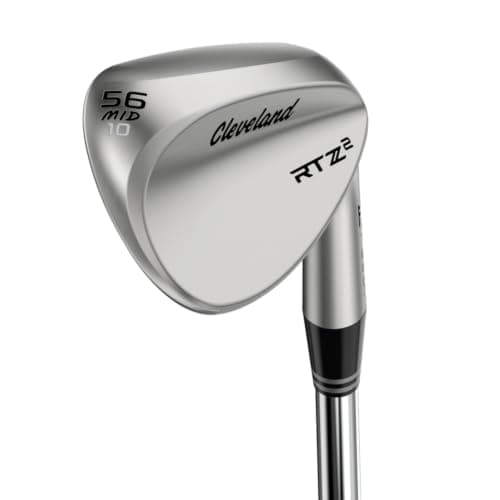
The Cleveland RTZ 2 Tour Satin is the other grind-led answer and the one to take if you would rather buy a current flagship than a run-out one. It is Cleveland’s present tour wedge and it comes in multiple grind options; our full write-up of the family sits on best golf wedges.

If you are buying the grooves

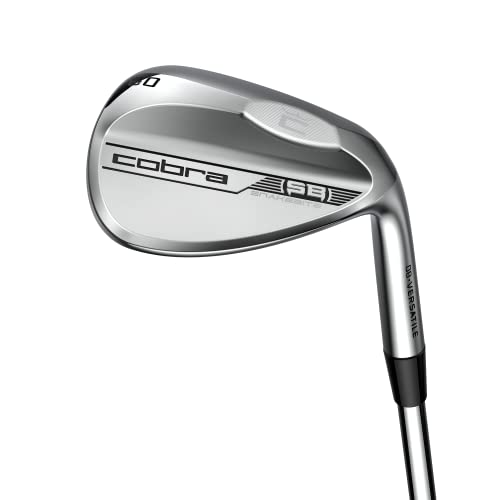
Then the Cobra Snakebite is the most specific answer anyone in this field gives you. Cobra publishes the numbers rather than implying them: the Snakebite scoreline is described as 11 percent deeper with 40 percent sharper edges, cut with a process that changes cutting tools more frequently to hold the edge. Groove geometry then varies by loft — narrower, tighter grooves on the 50-54° wedges and wider, shallower grooves on the 56-60° — and the 2023 line carries full-face grooves on the 56, 58 and 60° heads, so an open-faced flop shot still finds a groove. The listing here is the Silver WIDELOW grind.

Two things to hold in mind. Two generations of Snakebite are in circulation and their published details differ, so check the model year before comparing a spec you read elsewhere. And sharper, deeper grooves wear: a wedge bought for its scoreline has a service life rather than being a permanent purchase. Grooves are also the one part of a wedge the Rules police — conforming heads must meet the published groove and face-roughness specifications, so nothing here is a loophole.

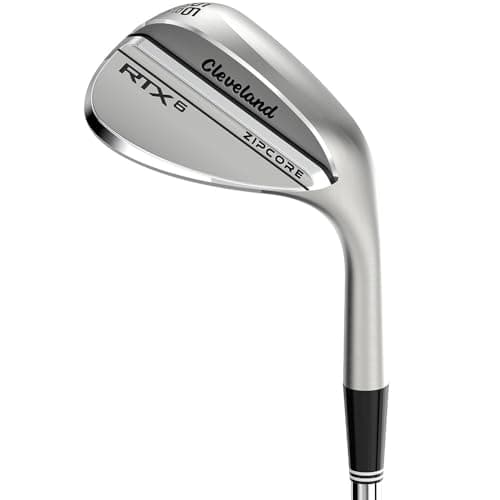
The Cleveland RTX 6 ZipCore is the value play in this lane: the previous generation of Cleveland’s tour wedge, with ZipCore and UltiZip grooves, at a price the current RTZ 2 does not come near. If the discount is doing the arguing and your strike is clean, it is the most wedge per dollar on this page.

If you are buying neither, and should admit it

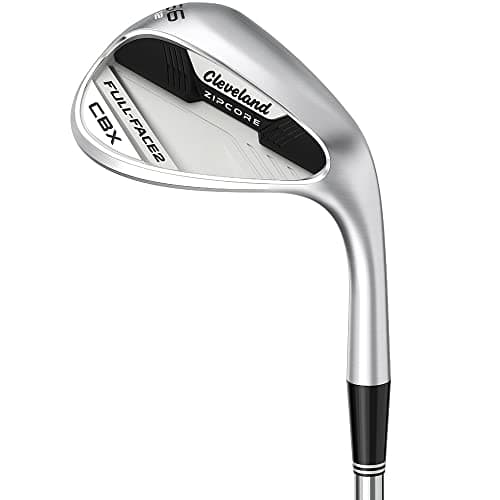
A large share of golfers shopping for a tour wedge want the badge and would score better with a forgiving one, so this page names that case rather than taking the sale. The Cleveland CBX Full-Face 2 is a game-improvement wedge with a wider, more forgiving sole and a full-face groove pattern, built for a golfer whose short game is still inconsistent. A tour-shaped blade punishes a chunk or a thin; the CBX gives some of that back. If you chunk or blade your chips, buy this and ignore everything above it — best golf wedges for beginners makes that case in full.

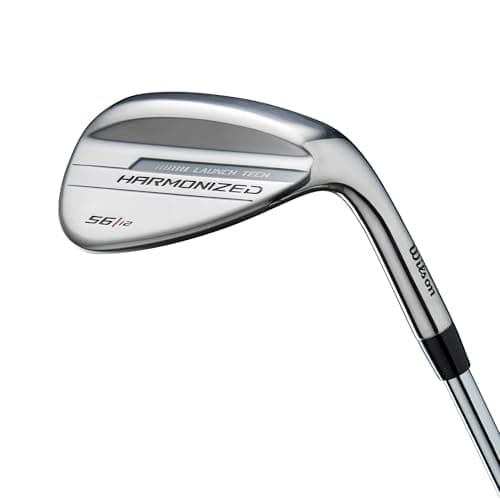
The Wilson Harmonized 56° is the budget end of the same thought: a classic-shaped sand wedge from a major brand for a fraction of any tour forging here. It has no grind choice, no published groove technology and no tour story, and for a golfer who plays twenty rounds a year and bunkers out twice a round, none of that costs them a shot.

The gap nobody fills until it bites them

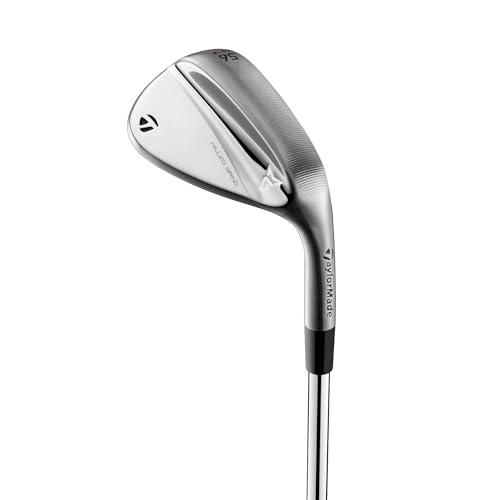
One more pick, for a different reason. Modern pitching wedges are lofted strong enough that the step from a set PW to a 56° sand wedge is a full yardage band with nothing in it. The TaylorMade Milled Grind listed here is a 52° with 9° of bounce in chrome — the standard gap-wedge configuration, from a major brand, in the one slot most amateur bags are actually missing.

We are quoting this pick from the live listing rather than a manufacturer spec sheet, and we say so on the card: TaylorMade publishes its wedge detail by model year and the listing does not state which Milled Grind generation it is, so the loft, bounce, finish and shaft are the verified facts and nothing else is. Before you buy it, check your own set lofts — if your pitching wedge is 46° or weaker, or you already carry a 50°, the yardage hole this club fills does not exist in your bag.

What no alternative here gives you

The custom-order menu. A Vokey is sold as something you specify — loft, bounce, grind, finish, and a raw option through WedgeWorks at a published $189 a wedge — and every alternative on this page is sold as a finished SKU you either find in the configuration you need or do not. If your fitting has told you precisely which loft, bounce and sole shape you need, that menu is the product, and the honest answer is to buy the original. If you are choosing from a page like this one, you are almost certainly not in that position, and a well-chosen 56 or 58 with mid bounce will serve you better than a mis-specified anything.

The short answer

Quick picks

#ProductBest forScorePrice
01
Mizuno Mizuno T24 Soft White Satin Wedge (58°, 10 Bounce, Right Hand)
Mizuno T24 Soft White Satin Wedge (58°, 10 Bounce, Right Hand)

The wedge line that answers the grind question the way the tour-wedge benchmark does - five grinds across seventeen lofts, so you fit the sole to your attack angle rather than taking what the box gives you.

Picking a sole grind to match your attack angle
8.0
$129.99Amazon
02
Cleveland Cleveland RTZ 2 Tour Satin Wedge
Cleveland RTZ 2 Tour Satin Wedge

Cleveland's current tour wedge — second-generation Z-Alloy, UltiZip grooves and five sole grinds including the returning 588 — and the one to buy once you strike your short shots cleanly enough to use it.

Ball-strikers who want the current tour wedge
7.6
$199.99Amazon
03
Cobra Cobra Snakebite Wedge (Silver, WIDELOW Grind, Right Hand)
Cobra Snakebite Wedge (Silver, WIDELOW Grind, Right Hand)

The groove-first answer: Cobra built this line around a sharper, deeper scoreline and then varied the groove shape by loft, which is a spin argument rather than a shaping one.

Maximum published groove aggression
7.6
$199.99Amazon
04
Cleveland Cleveland RTX 6 ZipCore Wedge
Cleveland RTX 6 ZipCore Wedge

The value tour wedge — ZipCore, UltiZip grooves and a soft feel at a price the current RTZ 2 doesn't come close to; the one to buy once you can strike your short shots cleanly and the discount is doing the arguing.

Tour spin and shot-making for less
7.4
$117.69Amazon
05
TaylorMade TaylorMade Milled Grind Wedge (Chrome, 52°, 9 Bounce, Right Hand)
TaylorMade Milled Grind Wedge (Chrome, 52°, 9 Bounce, Right Hand)

The gap-wedge slot filled by a major brand whose whole line name is the manufacturing step - a milled sole, in the one loft most amateurs are missing.

The gap between a pitching wedge and a sand wedge
7.6
$129.99Amazon
06
Cleveland Cleveland CBX Full-Face 2 Wedge
Cleveland CBX Full-Face 2 Wedge

The forgiving wedge — a cavity-back, full-face design that flatters a less-than-perfect strike while still spinning like a Cleveland.

Higher handicaps who want a forgiving wedge
7.4
$70.99Amazon
07
Wilson Wilson Harmonized Wedge (56°)
Wilson Harmonized Wedge (56°)

A budget wedge that covers the basics — a classic-shaped 56° for far less than a tour wedge, if spin and grind options aren't your priority.

The best value wedge
6.8
$50.99Amazon

#ad · Live prices from the Amazon Product API, as of November 28, 2026. Where we have no verified live price, we show none — we would rather leave a gap than print a number that has rotted.

In detail

The picks, in full

01
Mizuno Mizuno T24 Soft White Satin Wedge (58°, 10 Bounce, Right Hand)

Picking a sole grind to match your attack angle

Mizuno T24 Soft White Satin Wedge (58°, 10 Bounce, Right Hand)

5 grinds across 17 loft options (Mizuno)Loft-specific grooves (Mizuno)58° / 10° bounce on this listingSoft White Satin finish; Dynamic Gold Tour Issue S400 stock shaft
8.0/10

The wedge line that answers the grind question the way the tour-wedge benchmark does - five grinds across seventeen lofts, so you fit the sole to your attack angle rather than taking what the box gives you.

Forgiveness
6
Distance
7
Feel
10
Playability
10
Value
7

Pros

  • Grind choice is the thing a serious wedge buyer is actually shopping for, and Mizuno publishes five across the T24 range: X is low bounce with aggressive relief for a shallow attack angle, V is high bounce with aggressive relief for a steeper one, S is higher bounce with limited relief, D is mid bounce with moderate relief
  • Mizuno specifies loft-specific grooves rather than one groove pattern across the set, which is the same reasoning behind the benchmark's progressive groove designs
  • A Mizuno forging with a Dynamic Gold Tour Issue S400 as the stock shaft is a tour-spec build, and this listing's 58° with 10° of bounce is the most broadly useful sand-wedge combination there is

Cons

  • This listing is one loft-and-bounce combination; if 58/10 is not what your bag needs, you are ordering a different SKU rather than configuring this one
  • Mizuno's published line price is around $180 a wedge, so a full three-wedge setup in this family is a serious spend next to a value forging

Skip this if…

…you chunk or thin your short shots. A tour-shaped wedge rewards a clean strike and punishes a poor one; if your short game is a work in progress, a wide-soled game-improvement wedge will save you more shots than any grind will.

$129.99View on Amazon

Price as of November 28, 2026. Prices change — Amazon's is the one that counts.

#ad · we may earn a commission from this link to Mizuno T24 Soft White Satin Wedge (58°, 10 Bounce, Right Hand)

02
Cleveland Cleveland RTZ 2 Tour Satin Wedge

Ball-strikers who want the current tour wedge

Cleveland RTZ 2 Tour Satin Wedge

56° loft, Mid grind (this listing)Tour blade wedgeZ-Alloy, UltiZip grooves, HydraZip face588 / Mid / Full / Low / Adapt grinds
7.6/10

Cleveland's current tour wedge — second-generation Z-Alloy, UltiZip grooves and five sole grinds including the returning 588 — and the one to buy once you strike your short shots cleanly enough to use it.

Forgiveness
6
Distance
7
Feel
10
Playability
10
Value
5

Pros

  • Cleveland's published spin package — UltiZip grooves, HydraZip face and Rotex milling — and Golf Monthly's review singles out spin from varied lies as the wedge's strength
  • Five sole grinds, including the 588 shape back in the line for the first time in years, so the sole is matched to your turf and strike rather than taken as given
  • Z-Alloy, the softer carbon-steel formula Cleveland introduced on the first RTZ, with a ZipCore iQ hosel core Cleveland publishes as optimized per loft and grind

Cons

  • $199.99 a club at Cleveland's own price, roughly $70 more than the outgoing RTX 6 ZipCore below — and most amateurs never out-spin the older grooves
  • A tour blade still punishes a fat or thin strike; the help here is in the grind choice, not in the head
  • The Adapt grind is only sold with full-face grooves, which is Golf Monthly's one criticism of the line — you can't take the higher toe profile with a conventional face

Skip this if…

…you chunk or thin your chips, or the price gap is doing the deciding. A tour blade punishes a poor strike — the CBX Full-Face or the Square Strike will save a developing short game far more shots — and if you are buying on value, the previous-generation RTX 6 gives up very little for real money.

$199.99View on Amazon

Price as of November 28, 2026. Prices change — Amazon's is the one that counts.

#ad · we may earn a commission from this link to Cleveland RTZ 2 Tour Satin Wedge

03
Cobra Cobra Snakebite Wedge (Silver, WIDELOW Grind, Right Hand)

Maximum published groove aggression

Cobra Snakebite Wedge (Silver, WIDELOW Grind, Right Hand)

Snakebite grooves: 11% deeper, 40% sharper edges (Cobra, 2021 King Cobra)Narrower tighter grooves at 50-54°, wider shallower at 56-60° (Cobra)Full-face grooves on 56, 58 and 60° (Cobra, 2023)WIDELOW sole grind on this listing
7.6/10

The groove-first answer: Cobra built this line around a sharper, deeper scoreline and then varied the groove shape by loft, which is a spin argument rather than a shaping one.

Forgiveness
7
Distance
7
Feel
8
Playability
9
Value
7

Pros

  • Cobra publishes the groove numbers rather than implying them: 11 percent deeper with 40 percent sharper edges, cut with a process that changes tools more often to hold the edge - the spin mechanism is a manufacturing claim you can check
  • Groove geometry varies by loft, with narrower, tighter grooves on the 50-54° wedges and wider, shallower grooves on the 56-60°, which is the same loft-specific thinking the premium lines use
  • Three sole grinds across the line and full-face grooves on the high-loft heads mean the open-faced flop shot still finds a groove

Cons

  • Two generations of Snakebite are in circulation and the published details differ between them - check the model year on the listing before you compare a spec you read somewhere else
  • Sharper, deeper grooves wear, and a wedge bought for its grooves is a wedge with a service life rather than a permanent purchase

Skip this if…

…you only play one wedge and it lives in the bag for five years. Groove-led wedges are at their best in the first couple of seasons; a buyer who replaces rarely gets more from a forgiving sole than from a sharp scoreline.

$199.99View on Amazon

Price as of November 28, 2026. Prices change — Amazon's is the one that counts.

#ad · we may earn a commission from this link to Cobra Snakebite Wedge (Silver, WIDELOW Grind, Right Hand)

04
Cleveland Cleveland RTX 6 ZipCore Wedge

Tour spin and shot-making for less

Cleveland RTX 6 ZipCore Wedge

56° loft (this listing)Tour blade wedgeZipCore / UltiZip groovesMultiple grind options
7.4/10

The value tour wedge — ZipCore, UltiZip grooves and a soft feel at a price the current RTZ 2 doesn't come close to; the one to buy once you can strike your short shots cleanly and the discount is doing the arguing.

Forgiveness
6
Distance
7
Feel
9
Playability
9
Value
6

Pros

  • Cleveland's sharpest, most durable grooves for maximum greenside spin — the reason to buy a dedicated wedge at all
  • A soft, precise feel and the shot-making range a good short game wants: open it, flight it, spin it
  • Sold in multiple grinds so you can match the sole to your turf and your swing

Cons

  • A tour-style blade is less forgiving on a fat or thin strike than a cavity-back wedge
  • Priced at the top of the wedge market — you're paying for the grooves and the grind options
  • Two generations old: Cleveland replaced the RTX line with the RTZ in January 2025 and the RTZ 2 in September 2026 (softer Z-Alloy steel, the 588 grind back, a full-face 'Adapt' grind), so this is the discounted older model, not Cleveland's current tour wedge

Skip this if…

…you chunk or thin your chips. A tour blade punishes a poor strike; if your short game is a work in progress, a game-improvement wedge like the CBX Full-Face or the Square Strike will save you more shots than tour grooves ever will.

$117.69View on Amazon

$129.999% off

Price as of November 28, 2026. Prices change — Amazon's is the one that counts.

#ad · we may earn a commission from this link to Cleveland RTX 6 ZipCore Wedge

05
TaylorMade TaylorMade Milled Grind Wedge (Chrome, 52°, 9 Bounce, Right Hand)

The gap between a pitching wedge and a sand wedge

TaylorMade Milled Grind Wedge (Chrome, 52°, 9 Bounce, Right Hand)

52° loft, 9° bounce (this listing)Chrome finish, steel shaft, right handedStandard bounce optionMilled sole line (TaylorMade)
7.6/10

The gap-wedge slot filled by a major brand whose whole line name is the manufacturing step - a milled sole, in the one loft most amateurs are missing.

Forgiveness
7
Distance
7
Feel
8
Playability
8
Value
8

Pros

  • 52 degrees with 9 degrees of bounce is the single most commonly missing club in an amateur bag: modern pitching wedges are strong enough that the gap to a 56° sand wedge is a full yardage band with nothing in it
  • Chrome, steel and standard bounce is the configuration that suits the widest range of courses and swings - it is the safe default, which for a gap wedge is exactly right
  • A major-brand wedge in a current chrome finish, which matters for resale and for matching the rest of a bag in a way a value forging does not

Cons

  • We are quoting this one from the live listing rather than a manufacturer spec sheet, because TaylorMade publishes its wedge detail by model year and this listing does not state which Milled Grind generation it is - treat the loft, bounce and finish as the verified facts and nothing else
  • A 52° gap wedge is a single-purpose club: it will not replace a sand wedge or a lob wedge, and a bag already carrying a 50° has no slot for it

Skip this if…

…your pitching wedge is 46° or weaker, or you already carry a 50°. The gap-wedge argument depends on your own set lofts - check them before you buy, because the club is only useful if the yardage hole is real.

$129.99View on Amazon

Price as of November 28, 2026. Prices change — Amazon's is the one that counts.

#ad · we may earn a commission from this link to TaylorMade Milled Grind Wedge (Chrome, 52°, 9 Bounce, Right Hand)

06
Cleveland Cleveland CBX Full-Face 2 Wedge

Higher handicaps who want a forgiving wedge

Cleveland CBX Full-Face 2 Wedge

58° loft (this listing)Cavity-back / hollow designFull-face groovesGame-improvement wedge
7.4/10

The forgiving wedge — a cavity-back, full-face design that flatters a less-than-perfect strike while still spinning like a Cleveland.

Forgiveness
9
Distance
7
Feel
7
Playability
7
Value
7

Pros

  • Cavity-back, game-improvement construction is far kinder to an off-center strike than a tour blade
  • Full-face grooves grip on open-face and toe-side contacts — genuinely useful on flops and awkward lies
  • Cleveland grooves and a wide, forgiving sole that resists digging

Cons

  • Not as workable or as pure-feeling as the RTX blade for a skilled short game
  • The forgiveness comes from a chunkier head some better players don't like the look of

Skip this if…

…you're a clean ball-striker who wants to shape and flight wedges. The forgiving cavity-back does less of what a precise short game asks for — the RTX blade gives you more control and feel.

$70.99View on Amazon

Price as of November 28, 2026. Prices change — Amazon's is the one that counts.

#ad · we may earn a commission from this link to Cleveland CBX Full-Face 2 Wedge

07
Wilson Wilson Harmonized Wedge (56°)

The best value wedge

Wilson Harmonized Wedge (56°)

56° loftClassic blade shapeTrue-bounce soleBudget tier
6.8/10

A budget wedge that covers the basics — a classic-shaped 56° for far less than a tour wedge, if spin and grind options aren't your priority.

Forgiveness
6
Distance
7
Feel
6
Playability
6
Value
9

Pros

  • A proper single-loft wedge for a fraction of a tour wedge's price
  • Classic shape and a sole grind that works from most normal lies
  • A sensible way to add a 56° gap without paying for grooves you may not use yet

Cons

  • Won't spin or last like Cleveland's premium grooves
  • One sole grind and a basic feel — fine, not special

Skip this if…

…your scoring leans on greenside spin and shot-making. A budget wedge's grooves fade faster and grip less than a tour wedge's; if the short game is your strength, buy the RTX and keep it.

$50.99View on Amazon

$59.9915% off

Price as of November 28, 2026. Prices change — Amazon's is the one that counts.

#ad · we may earn a commission from this link to Wilson Harmonized Wedge (56°)

Bounce is the spec, grind is the refinement

If you take one thing from this page: bounce matters more than brand, and almost nobody shopping for a wedge knows their own number. Bounce is the angle between the leading edge and the lowest point of the sole — it is what stops the club digging. High bounce suits a steep attack angle and soft turf or fluffy sand; low bounce suits a shallow attack angle and firm conditions, and will dig on a steep swing.

Grind is then the shaping around that bounce: how much material is relieved from the heel, toe and trailing edge, which is what lets you open the face without raising the leading edge off the ground. That is why the grind matrix is the thing a serious wedge buyer shops and the thing a spec-sheet comparison usually misses. Mizuno publishes four of its five in plain language; the benchmark publishes six. Everything else on this page publishes fewer, and the budget picks publish none.

If you do not know your attack angle, the default that suits the most golfers is a 56° with around 10° to 12° of bounce, which is exactly why the top pick on this page is a 58/10 and why the budget pick is a 56. Start there and refine later.

The arithmetic: wedges are a consumable

This is the part of the category that nobody prices in. Grooves wear, and a wedge is the club most likely to be hit off sand, firm lies and range mats — the three surfaces that dull a scoreline fastest. A tour wedge played twice a week will measurably lose spin over a couple of seasons, which is why tour players change them several times a year.

That reframes the whole price question. If you play fifty rounds a year and practice, the running cost of a groove-led wedge is real and the cheaper forging looks better than it does on a spec sheet. If you play fifteen rounds a year, a premium wedge will outlast your interest in it and the spend is fine. Work out which you are, then pick a lane on this page.

How many wedges you actually need

Three total gaps is the common answer and four is usually one too many. Your set pitching wedge, then a gap wedge roughly 4 to 6 degrees weaker, then a sand wedge around 56°. A lob wedge is a specialist club that a lot of amateurs carry and few use well, and it occupies one of only fourteen slots the Rules allow.

Check your own set lofts before adding anything, because modern iron lofts have moved: a strong pitching wedge changes where every gap sits. The bag-level version of this argument is in best golf clubs, and the iron lofts that cause the problem are covered in best golf irons.

Why we do not print the price in the text

Every number on this page comes from the live Amazon listing through our price layer at the moment the page is served, behind a 48-hour freshness gate, stamped with the date above. Wedges are discounted hard at model-year changeover and the order of these seven by price moves with it, which is exactly why this page is organized by what you are replacing rather than by a price order that would be wrong next month. The only dollar figures typed into the prose above are ones their makers published and we did not set — Mizuno’s roughly $180 line price, Cobra’s $160 and Titleist’s $189 WedgeWorks raw option — each cited at the foot of the page.
How we ranked this

We don't run a testing lab — and we say so

We compiled published manufacturer specifications, official standards and aggregated owner reviews, computed the running costs the big test-labs leave out, and scored each pick against a published rubric. The scores are judgments from documented research — they are not lab measurements we took, because we don't have a lab and we're not going to pretend we do. You can check every number we publish.

Questions

Frequently asked

What is the best Vokey wedge alternative?
The Mizuno T24 if you are replacing the grind choice, because Mizuno publishes five sole grinds across seventeen lofts. The Cobra Snakebite if you are replacing the grooves, because Cobra quantifies them at 11 percent deeper with 40 percent sharper edges. The Cleveland RTZ 2 if you want a current flagship tour wedge. Live prices for all three are in the table above.
What is Vokey known for?
Two published things. Grind choice — Titleist lists six tour-proven sole grinds (F, S, M, K, T, D) across 25 combinations of loft, bounce and grind — and the patented Spin Milled groove cutting process Titleist says delivers higher, more consistent spin. Titleist also states Vokey Design has been the most played wedge on the PGA TOUR since 2004. Those are the properties an alternative has to replace.
What bounce should I get on a wedge?
If you do not know your attack angle, 56 degrees with roughly 10 to 12 degrees of bounce suits the widest range of golfers and conditions. High bounce resists digging and suits a steep swing or soft turf and fluffy sand; low bounce suits a shallow swing and firm conditions but will dig on a steep one. Bounce matters more than the badge on the back, and almost nobody shopping for a wedge knows their own number.
Is a cheaper wedge worth it if my short game is inconsistent?
Yes, and it is probably the better buy. A tour-shaped blade rewards a clean strike and punishes a chunk or a thin; a wider-soled game-improvement wedge like the Cleveland CBX Full-Face 2 gives some of that back. If you chunk or blade chips, buy forgiveness rather than grooves — best golf wedges for beginners makes the case in full.
Do wedge grooves wear out?
Yes. A wedge is the club most often hit off sand, firm lies and range mats, which are the three surfaces that dull a scoreline fastest, and a wedge played twice a week will lose spin over a couple of seasons. That is why tour players change them several times a year, and why the running cost matters more on a groove-led wedge than on a forgiving one. Conforming grooves are also capped by the Equipment Rules, so no wedge here offers a shortcut.

Keep reading

Receipts

Sources

We do not run a testing lab, and we do not pretend to. Every spec number here comes from a manufacturer's published sheet or an official standard, cited above. Where we could not verify something, we say so on the page rather than quietly leaving it out. Read our full method.