For the golfer who wants the thing a Scotty actually delivers - a soft, dense, milled carbon-steel strike in a classic head - from a company whose entire reputation is built on forging soft carbon steel.
The verdict: the Mizuno M Craft Osaka P is the alternative most Scotty shoppers should buy. Mizuno describes it as forged from 1025E mild carbon steel and precision milled, in a square-back head with a plumber’s neck — which is the same material story, the same manufacturing step and broadly the same shape language that makes a milled tour putter feel the way it does. If what you want is forgiveness rather than feel, the Evnroll Neo Classic ER2 is the pick, because its patented SweetFace grooves are designed to return the same ball speed from the heel and toe as from the middle. Budget pick: the Cleveland Huntington Beach Soft 2, a milled-face blade from a major brand at a fraction of the money. Prices are live from our price layer, stamped November 28, 2026.
What a Scotty Cameron is actually known for
Worth saying plainly before we rank anything against it, because an alternatives page that starts by running the original down is useless. Titleist’s Scotty Cameron line is the most recognized putter brand in golf and it earns that on four separate properties, not one:
- A milled block of steel. These are machined from solid stainless or carbon steel rather than cast, which is what produces the dense, quiet strike people describe as “soft”. It is a manufacturing step, it is expensive, and it is real.
- Classic shapes, executed conservatively. The Newport family in particular is the reference blade silhouette that half the putter market draws from. If you like how a Scotty looks at address, that is a legitimate reason to buy one and no spec sheet will argue you out of it.
- A fitting and customization culture. Lengths, head weights, neck styles, grips, stamping. A Scotty is sold as something you specify.
- Resale. The one nobody lists and everybody relies on. A used Scotty holds value in a way almost no other putter does, which quietly changes the real cost of ownership.
So the useful question is not “what is cheaper”. It is which of those four am I actually buying? This page is organized around that, because the right alternative is different for each one — and for one of the four, the honest answer is that there isn’t one.
If you want the milled carbon-steel feel
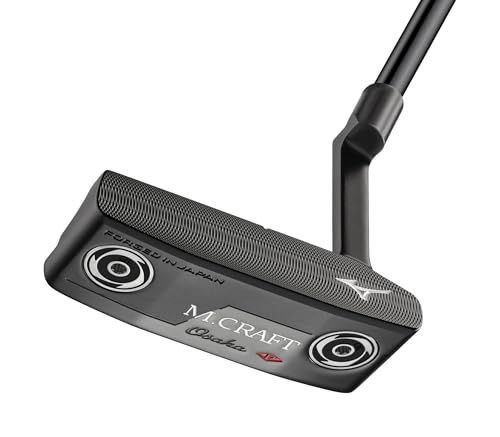
Buy the Mizuno M Craft Osaka P. Mizuno has spent forty years selling golfers on forged soft carbon steel in its irons, and the M Craft is that argument applied to a putter: Mizuno specifies forged 1025E mild carbon steel, precision milled, and describes its 1025E Pure Select material as held to a tolerance six times tighter than the industry standard. Retailers publish 3° of loft and a 70° lie with a choice of 355 g, 365 g or 375 g head weights, so the head can be matched to the greens you play rather than taken as it comes.
Two honest caveats. Mild carbon steel is softer than the 303 stainless most milled putters use — it feels superb and it marks, so treat the finish as a wear item. And the Osaka is a square-back blade, which means no fang, no wide sight frame and no high-MOI chassis: a heel or toe strike costs you more here than on a mallet. If that trade sounds wrong, skip to the next section.
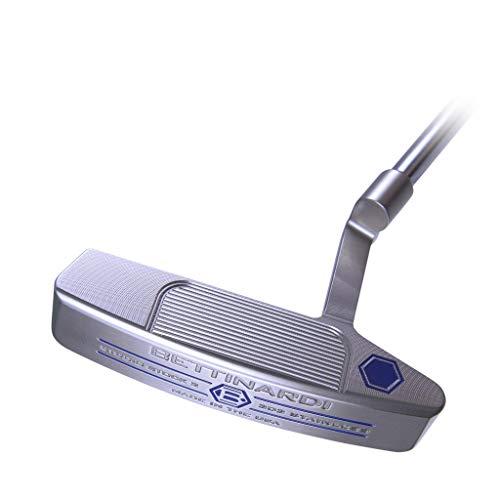
The Bettinardi Studio Stock 2 is the other answer in this lane and the more purist one. Bettinardi publishes 303 stainless steel, a 358 gram head, a Platinum finish and F.I.T. face milling — a small American shop machining single blocks of steel, which is the closest thing in this list to a direct rival on how the putter is made rather than on what it costs. Its hosel sits slightly toward the toe, giving less toe hang than a classic plumber’s neck and suiting a neutral stroke. The caveat is generational: this is the 2019 model, Bettinardi’s current Studio Stock line uses different face milling, and the stock on this listing is the stock that exists.
If you want forgiveness, not feel
A lot of golfers shopping for a milled tour putter are actually shopping for a putter that performs when they miss the middle, and a traditional milled blade is the wrong tool for that. Two picks here solve it in completely different ways.
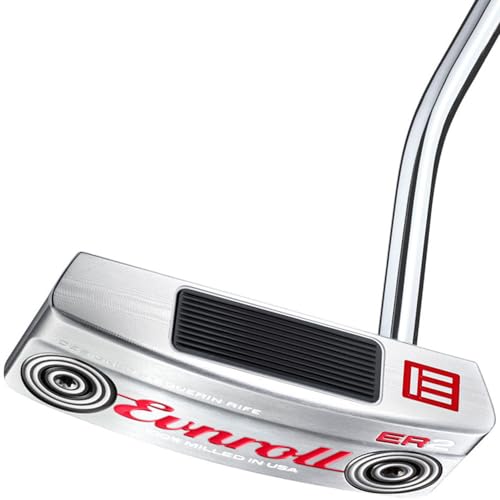
The Evnroll Neo Classic ER2 attacks it at the face. Evnroll’s entire premise is its patented SweetFace groove technology — precisely milled parabolic grooves the company says deliver even ball speeds from center and off-center hits — paired with a precision-milled 6061 polymer-filled aluminum insert. It is a CNC-milled mid-blade made in Carlsbad, California, with tungsten and steel swing weights and a published head weight per length (370 g at 33 in, 355 g at 34 in, 340 g at 35 in), so the balance is engineered to the length rather than left to it. The trade is that an insert is softer and quieter than solid milled steel, which blade purists will not accept, and Evnroll is a small brand with thin high-street presence.
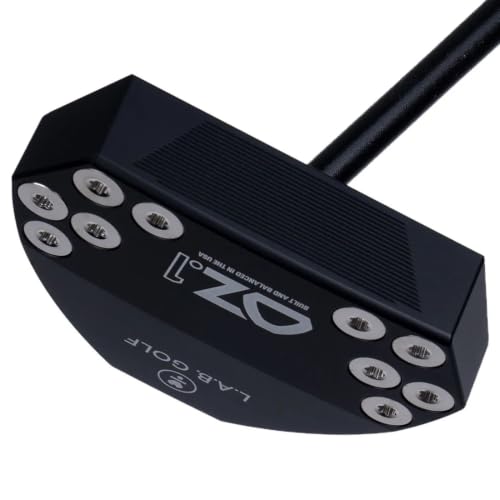
The L.A.B. Golf OZ.1 attacks it at the balance instead, and it is the most genuinely different club on this page. Lie Angle Balance is not a finish story: sole weighting plus a 2° shaft lean aligns the shaft with the head’s center of mass so the face resists twisting through the stroke — zero torque, in the brand’s language. L.A.B. publishes 6061 aluminum construction with a Type-3 anodized finish, and retailers list 3° loft and a 69° lie in 33, 34 and 35 inch lengths. The two caveats are the obvious one and the important one: it is the least traditional-looking head here by a distance, and because lie angle is what creates the balance, L.A.B. itself says having the putter fitted to your correct lie angle is of paramount importance. It offers a free remote fitting by video. Buy this one fitted or do not buy it.
If you want a tour shape with a stability chassis
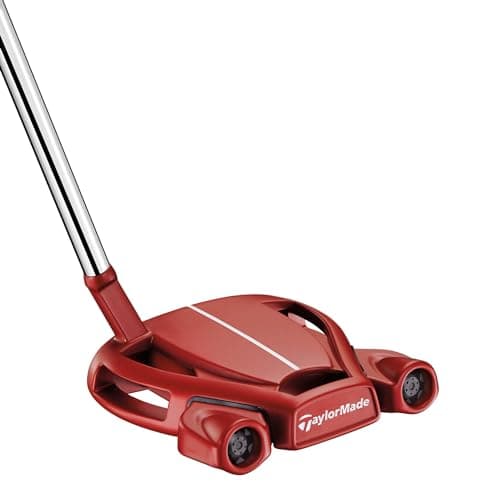
The TaylorMade Spider RED #3 is the mainstream answer and it is on this page because a lot of Scotty shoppers are cross-shopping the Phantom mallets rather than the Newport blades. TaylorMade builds the Spider around a lightweight 6061 aluminum core with a heavy 304 stainless perimeter — the standard recipe for a high-MOI head — with a Pure Roll surlyn insert cut with 45° grooves. The #3 is a small-slant neck, so it suits an arcing stroke; if your stroke is straight back and through, the Double Bend version is a different club and this listing is not it.
If you want the resale, there is no alternative
This is the property nothing on this page replaces and we are not going to pretend otherwise. A used Scotty Cameron holds value in a way that no Mizuno, Evnroll, L.A.B. or Bettinardi putter does, and if you buy, trade and re-buy putters regularly, that residual is a real part of the cost. A boutique putter from a small shop is the opposite: a narrow second-hand market and a slow sale. If resale is genuinely in your calculation, buy the original and enjoy it — that is the honest answer, and it is the one case on this page where the alternative loses outright.
The budget route, and what it gives up
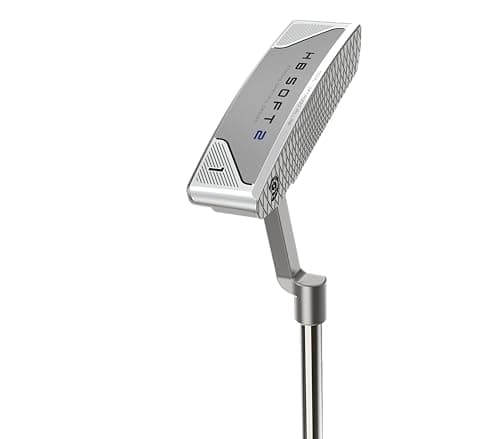
The Cleveland Huntington Beach Soft 2 #1 blade is the cheapest way onto a milled face from a major brand. Cleveland’s Speed Optimized Face Technology varies the milling density across the face — tight grooves in the center opening outward toward the heel and toe — with the published aim of normalizing ball speed so an off-center strike still finishes near the right distance. It has a plumber’s neck for a slight-arc stroke and Cleveland lists it as the most traditional shape in the family.
What it gives up against everything above it: it is a cast head with a milled face rather than a milled head, it carries a single thin sight line, and a blade resists twisting far less than any mallet here. It is the right buy for the golfer who wants the look and the roll without the ownership story, and the wrong buy for anyone who misses the center often — for whom best golf putters for beginners makes the forgiveness case properly.
The thing to settle before you spend anything
Your stroke, because it decides the neck and the neck decides the putter. Hold a putter level across a finger: face to the sky means face balanced, which suits a stroke that goes roughly straight back and through; a drooping toe means toe hang, which suits a stroke that arcs and rotates. Every milled blade on this page assumes some arc. The L.A.B. assumes you want neither and engineers the rotation out. Get this wrong and you will fight an expensive putter all season. The full argument is in mallet vs blade putter, and the whole field ranked on merit rather than against an anchor is best golf putters.
One club further down the bag, the same exercise against the other great fitting-led benchmark is Vokey wedge alternatives - grinds and grooves rather than milling and feel, with three tour wedges added to this registry in the same run as the putters above.
Milled, cast, and the word that does the most marketing work
“Milled” is used to mean two different things and the gap between them is most of the price difference on this page. A milled face means a cast head whose striking surface has been machined — the Cleveland on this page, and most putters under a couple of hundred dollars. A milled head means the whole body was machined from a solid block of steel, which is slower, wastes material, and holds tolerances a casting cannot. The Mizuno and the Bettinardi are milled heads. That is what you are paying for.
Does a milled head putt better? Not measurably, and anyone telling you otherwise is selling something. What it reliably delivers is consistency of feel across the face and a denser, quieter impact, which matters because putting is a feel skill and confidence in the strike is not a trivial thing to buy. Treat it as a feel purchase, price it accordingly, and do not expect it to hole putts your stroke would not.
The arithmetic: cost per stroke, and the residual
A club golfer takes thirty to forty putts a round, more than any other club in the bag by a wide margin, so cost per stroke makes the putter the most efficient place in golf to spend money. That is the argument for buying a good one. The limit on it is that the step from a competent milled-face blade to a boutique milled head buys feel and build, not holed putts — and we have ranked this page accordingly rather than by price.
The residual is the half of the sum most alternatives pages ignore. If you keep putters for a decade, resale is irrelevant and the alternative wins outright on price. If you churn through them, a Scotty’s second-hand value genuinely narrows the gap, and on a short enough hold it can close it. Work out which golfer you are before you decide how much of this page applies to you.
Length and fitting matter more than the badge
The single most common fault with an expensive putter is that it is the wrong length, which pushes your hands away from your body, lifts the toe off the ground and points the face somewhere you did not intend before you have moved it. Every putter on this page is sold in specific lengths — check the listing, because the stock build is usually 34 or 35 inches and a lot of golfers need less.
On the L.A.B. this goes further than a preference. Because Lie Angle Balance is created by the lie angle itself, a stock build that does not match your posture does not deliver the mechanism you paid for. L.A.B. gives a free remote fitting by video and says the fit is of paramount importance; take them up on it. The rules point worth knowing on any putter: you may not anchor the club against your body or forearm during the stroke, which rules out some grip styles rather than any putter here.
Why we do not print the price in the text
Every number on this page comes from the live Amazon listing through our price layer at the moment the page is served, behind a 48-hour freshness gate, stamped with the date above. The boutique end of the putter market is discounted erratically and run-out models move hardest of all, which is exactly why this page is organized by which property you are replacing rather than by a price order that would be wrong next month. The only dollar figures typed into the prose anywhere on this site’s putter pages are ones the makers themselves published, cited at the foot of the page.