For most golfers, and for anyone still finding the center of the face: the most forgiving major-brand set here, with hollow long irons, a sole built to stop a steep strike digging, and a graphite option that adds launch for a moderate swing.
The verdict: the Cleveland Launcher XL Halois the set most golfers should buy. It is the most forgiving major-brand set we rank, Cleveland publishes hollow-bodied long irons and a Gliderail sole that stops a steep strike digging, and the 5-iron-to-dual-wedge build is offered in graphite — which is the single spec most likely to add carry for a moderate swing. If you are a settled mid-handicapper who already flights the ball, the Mizuno JPX925 Hot Metal is the better set and Mizuno says so itself. Budget pick: the Cobra Air-X 2, the cheapest full set here. Prices are live from our price layer, stamped November 22, 2026.
A word on what this page is, because the iron aisle is the most over-segmented part of golf retail. This is the whole field: eight full sets with a live price, from a lightweight draw-biased starter set to a Grain Flow Forged players’ set at more than twice the money. Every pick names the deeper page for its band, because the honest answer to “best irons” depends on one thing we cannot see from here — how reliably you find the middle of the face.
The four specs that actually decide an iron set
Not the badge, not the model year, and not the marketing word on the back of the head. In the order they matter:
- 1. Forgiveness, which is head size and where the weight sits. A wide sole, a thick top line and perimeter weighting hold ball speed on the heel and toe strikes that most golfers actually make. A compact head with a thin sole does the opposite on purpose, in exchange for control. This is the spec that decides whether a set flatters you or exposes you, and it is why the ranking below is not sorted by price. The construction behind it is in cavity back vs blade irons.
- 2. Launch, which is loft plus sole design. Getting a mid-iron in the air is where most handicaps leak strokes, and the fix is rarely swing speed. Hollow long irons, tungsten low in the head and a sole with relief at the leading edge all raise launch without asking anything of you. Mizuno, for instance, publishes tungsten low in the 4-7 irons of the Hot Metal for a higher launch from a lower sweet spot and a steeper landing angle — a steeper landing angle is what makes a long iron hold a green.
- 3. Shaft weight and material. Graphite is lighter and helps a slower swing create speed and height; steel is heavier and gives a faster player more control. It is a speed question, not a quality question, and at every price on this page the shaft in the box will change your results more than the brand will. Two of these sets publish a graphite option. See graphite vs steel shafts.
- 4. Set composition, and therefore cost per club. “A set” is not a standard quantity. Some of these are six heads, 5-iron to pitching wedge; others are seven and include the gap wedge. At the same money those are very different deals, and the club that gets left out is always a scoring club you will buy within a season anyway.
Match the set to your strike, not to your ambitions
The most expensive mistake in this category is buying the set you want to deserve. Three honest cases:
- You are new, or you are still thinning and fatting it. Buy maximum forgiveness and spend nothing on feel. The Launcher XL Halo and the Air-X 2 are both built for this, and our beginner iron page and game-improvement ranking go deeper on the forgiveness argument.
- You are a 10-18 handicap who finds the face most of the time. You can take a slightly smaller head in exchange for better turf interaction and sensible loft gapping. This is Hot Metal and Qi territory, ranked in detail on best irons for mid-handicappers.
- Your swing is slowing down. Weight is the whole conversation: a lighter head and a lighter shaft recover more carry than any face technology. That is a different ranking, and it is best golf irons for seniors.
The ranking, pick by pick
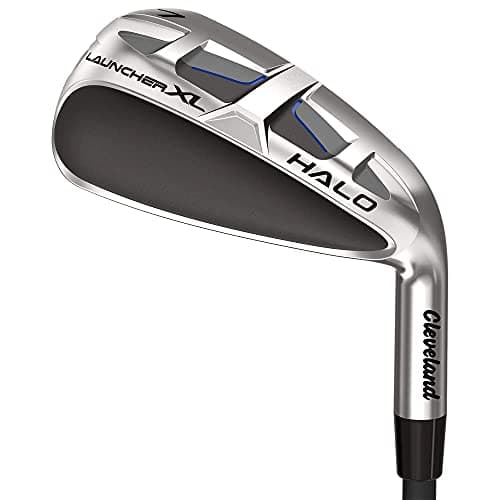
The Cleveland Launcher XL Haloleads because it does the thing most golfers need and nothing they do not. Cleveland publishes a MainFrame AI variable-thickness face, an oversized XL head, hollow-bodied long irons and the Gliderail sole; the honest summary is a set that launches easily, forgives generously and still looks like an iron. It is the previous generation — Cleveland has since shipped the Halo XL Full-Face — which is exactly why it is affordable.
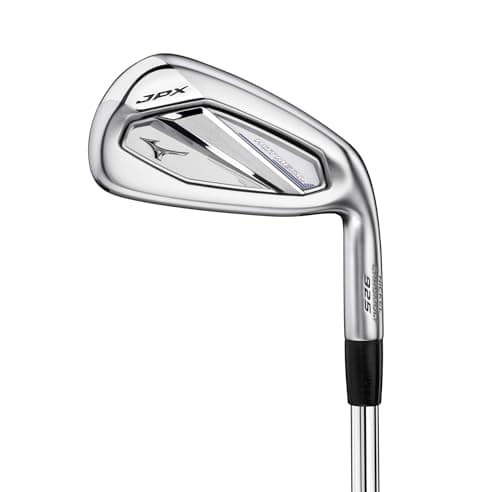
The Mizuno JPX925 Hot Metalis second and is the set a settled mid-handicapper should buy. Mizuno aims it at mid-to-high handicaps in its own words, builds it from Nickel Chromoly 4335 with tungsten low in the long irons, and publishes a loft table that still gaps sensibly into a wedge (22° 5-iron, 28° 7-iron, 42° pitching wedge). It is the most expensive set here that we would recommend without qualification, and the reason it is not first is that it asks you to find the face more often than the Cleveland does.
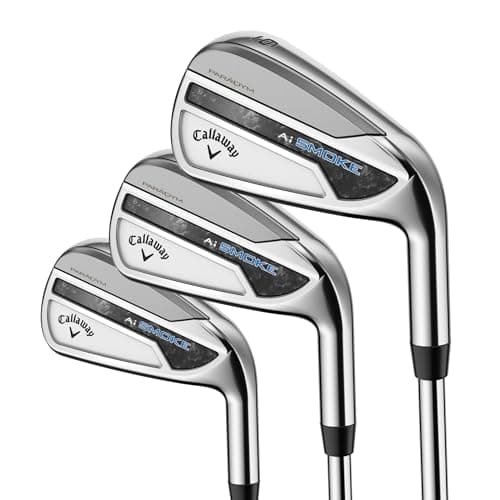
The Callaway Paradym Ai Smokeis the value play from a major brand: last season’s Callaway flagship, listing at a four-figure price and selling for a long way under it, with the Ai Smart Face that Callaway says it designed from the pre-impact swing data of thousands of real golfers and a pre-worn Dynamic Sole. Callaway aims it at average to high swing speeds chasing distance and dispersion. If a price ceiling is what is actually deciding your purchase, our best golf irons under $700 page ranks only the sets that fit under it.
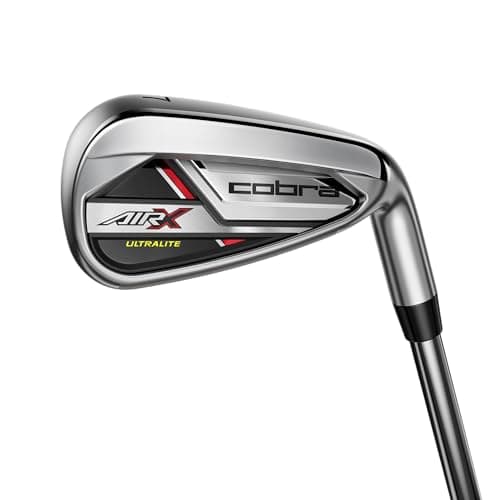
The Cobra Air-X 2 is the budget pick and the most specific set on this page. Cobra publishes a lightweight head, shaft and grip plus offset and heel weighting for a draw bias: it is built to get a slower swing airborne and to pull a slice back toward the middle. That makes it the easiest set here to hit well ifyour miss goes right, and the wrong set entirely if you already draw the ball — a built-in draw bias turns a good shot into a hook. It is also the cheapest full set with a live price on this page.
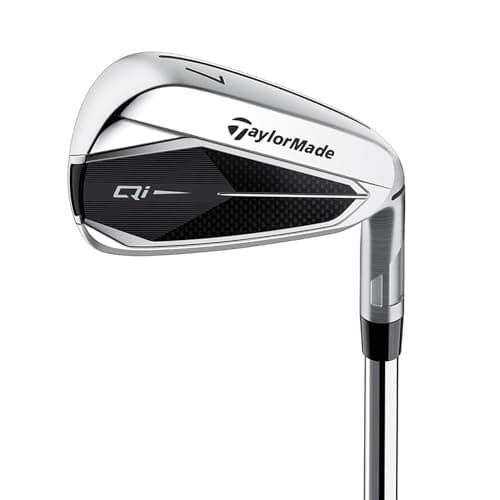
The TaylorMade Qiis the pick for the golfer who wants forgiveness without a game-improvement silhouette. TaylorMade describes the Cap Back Design with Toe Wrap Construction as blending a hollow-body iron with a traditional cavity back, which is a players-distance recipe in a set that still helps. Two honest notes: the Qi Max supersedes it, and its 43° pitching wedge is strong, so check your wedge gapping before you buy.
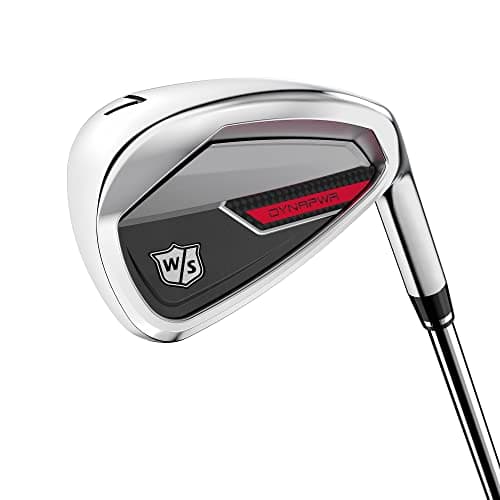
The Wilson Dynapoweris the most clubs for the money in a neutral build. Seven heads including the gap wedge, an AI-designed variable-thickness face with power holes that Wilson says extend the hot area toward the toe, lofts from 21° to 47°, and a choice of a light steel or a graphite shaft. Unlike the Cobra it has no draw bias built in, so it suits a golfer whose miss is not a slice. Where Wilson quietly costs you money is resale.
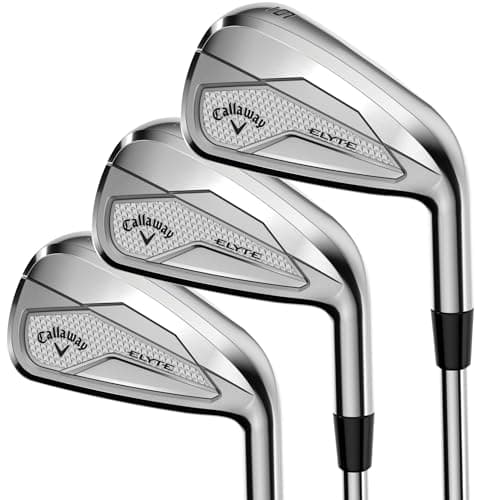
The Callaway Elyteis here for the buyer who wants the current model and is willing to pay for it. It is Callaway’s newest iron line, with a slightly weaker middle-iron loft spread than the Ai Smoke it replaced. Buy it because you want a current set and the resale that comes with one — not because you expect the scores to move, because the set below it in the catalog is the same idea for less.
Skip this: the forged set, unless you are a single-digit ball-striker
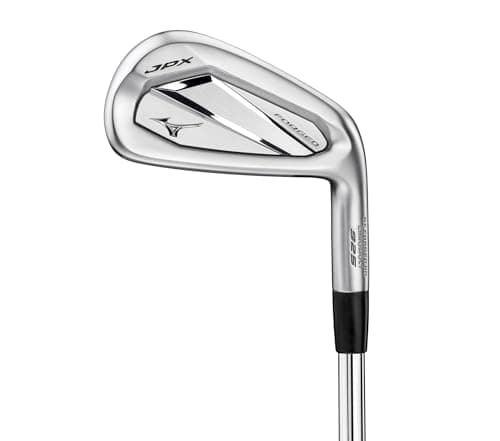
The Mizuno JPX925 Forgedis a superb set of irons and the wrong purchase for almost everybody reading this page. Mizuno’s own stated player band is pro to mid handicap, the head is 79.5 mm long against 85.4 mm for the Hot Metal, and the money is a clear premium over that set. The 4-iron-to-pitching-wedge build asks you to hit a 21° long iron. It is the set you will love on the demo day and resent in a medal round, because a smaller head punishes the heel and toe strikes a 15-handicap still makes. If you want it, earn it: play one of the sets above for two seasons, and buy the Forged when your strike marks have tightened — by then it will be a generation old and considerably cheaper.
One more thing we are not going to pad this list with
Single irons. Our registry carries two value-brand single irons, and they are a legitimate purchase — the cheapest honest way to start, to practice, or to fill one gap — but a single iron is not a set and counting one here to make the ranking longer would be dishonest arithmetic. They are ranked, with that caveat stated, on the game-improvement page. The same goes for the beginner box sets that include a driver, a putter and a bag: a different purchase, covered in best golf clubs for beginners.
Loft is the spec the marketing hides
Here is the thing nobody selling irons wants to explain: a large part of the “extra distance” in a modern game-improvement set comes from stronger lofts, not from the face. A 7-iron that was 34° a generation ago is 28° in several of the sets above. Hit that 7-iron and it goes further because it is, in the old money, a 6-iron with a 7 on the sole. That is not a scandal and it is not cheating — the clubs are designed as a matched set and the gaps between them are what matter — but it has two real consequences you should plan for.
First, the bottom of the set. Strong iron lofts push the pitching wedge stronger too, which opens a yardage hole between your pitching wedge and your sand wedge. Look at the published pitching-wedge loft of the set you are buying: 42° or 43° means you need a gap wedge, and whether the set includes one changes the real price. Our wedge roundup is the companion purchase to every set on this page.
Second, the top of the set. A 21° or 22° 5-iron is a hard club for a mid-handicapper to launch, and a 19° 4-iron is harder still. A hybrid of the same loft is easier to hit for almost everyone, which is why the sensible modern bag stops the irons at the 5-iron and uses a hybrid or two above it. Buying a set with a 4-iron you will never use is money spent on a club that lives in the garage. Remember the fourteen-club limit too: every long iron you keep is a slot a wedge could have had.
Cost per club, and the arithmetic that beats brand loyalty
Divide the live price in the table by the number of heads you are getting. That one sum reorders this page for a lot of buyers, because the sets that include a gap wedge are carrying seven clubs and some of the celebrated sets are carrying six. Then add the shaft question: if a graphite option costs little more and your swing is moderate, it is the cheapest distance on this page — cheaper than stepping up a model year, and it actually changes ball flight.
The last piece of the arithmetic is time. Irons do not become obsolete the way drivers do; the governing specifications for grooves and face roughness are fixed, so a set bought today plays the same in five years as it does this afternoon. That makes last season’s flagship the best value in golf equipment, and it is why two of the strongest picks above are previous-generation sets. If you want to stretch the budget further still, the used market is genuinely good for irons — no battery, no moving parts — and our used vs new guide covers the two checks worth making. Where any of this money is best spent overall is the subject of how much to spend on clubs.
Why we do not print the price in the text
Every number on this page comes from the live Amazon listing through our price layer at the moment the page is served, behind a 48-hour freshness gate, stamped with the date above. Iron sets discount hard and unpredictably as model years turn over, which is the whole reason the value picks here are what they are — and it is why a figure typed into a sentence would be wrong within weeks. The table is the price. Our sentences are the reasoning.