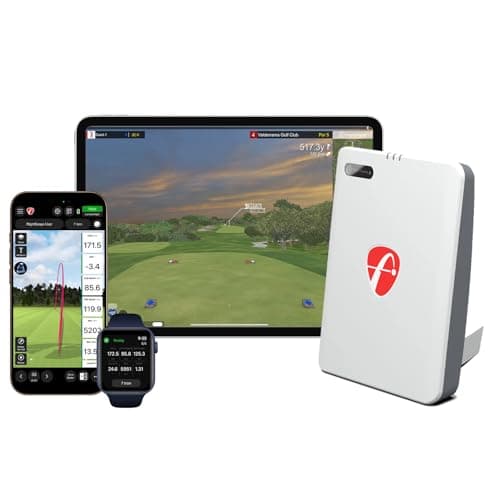
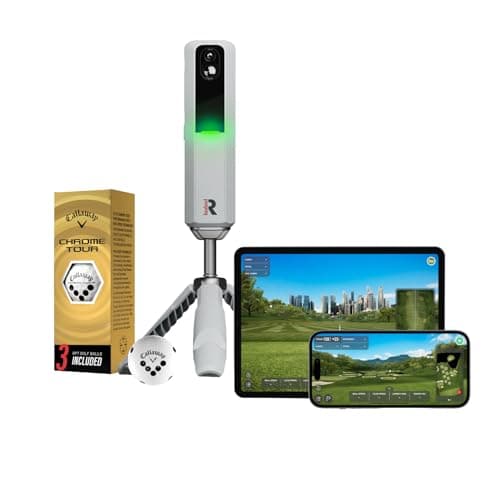
For the golfer who wants the SkyTrak's defining feature rather than its price: a camera-plus-radar unit that measures ball spin rather than estimating it, and adds shot video the SkyTrak does not have.
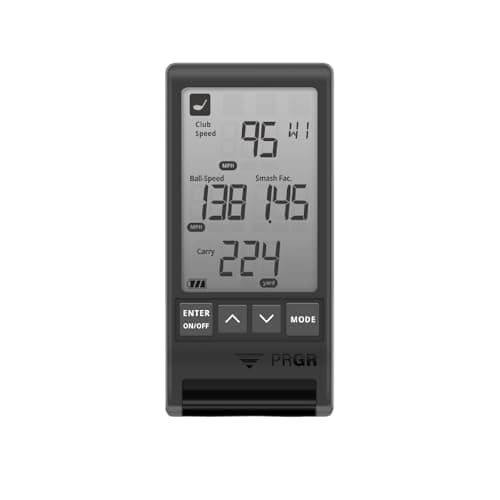
Budget pickPRGR HS 130-A — the cheapest honest alternative here, and the only one with nothing to subscribe to at all - ball and club speed, smash factor and distance on its own screen, and nothing else $179.99 on Amazon
The verdict: if measured spin is why you were looking at a SkyTrak+, the Rapsodo MLM2PROis the alternative — it is the only other unit we rank that measures ball spin rather than deriving it, and it adds shot video replay the SkyTrak does not have. If the annual plan is why you were looking, the Garmin Approach R10is the alternative, because Garmin’s basic app tier is genuinely free. Budget pick: the PRGR HS 130-A, the only unit here with no app and nothing to subscribe to. And the honest headline, before you read any further: no unit on this page gives you measured spin with zero recurring cost. That combination does not exist in this registry, and a page that implied otherwise would be selling you something. Prices are live from our price layer, stamped November 22, 2026.
Why people look for a SkyTrak alternative
Two reasons, and they pull in opposite directions. The first is the price: the SkyTrak+ costs several times what a pocket doppler costs, which is a lot of money for a device whose job is to tell you how far you hit a 7-iron. The second is the plan. SkyTrak ships a free Basic membership (driving range, Sim Club, PinSeeker) with the unit, and its Essential, Core and Elite tiers are paid annual plans that add the game-improvement tools and course play. Published tier prices ranged from roughly $100 to roughly $600 a year across SkyTrak’s own pages when we last checked them, and they are discounted periodically — verify the current figure before you budget, because it is the number that decides this purchase.
Those two reasons want different answers. If price is the problem, almost everything on this page is cheaper. If the recurring plan is the problem, most of this page still has one — and that is the thing worth understanding before you swap.
The measured-spin problem, stated plainly
The SkyTrak+ is a dual doppler radar plus a photometric camera system, and SkyTrak publishes nine ball parameters and five club parameters for it, including back spin and side spin as measurements. That is what the money buys: the ball itself is read, so spin is reported rather than inferred from flight.
Of the five alternatives here, exactly one measures spin: the Rapsodo MLM2PRO, which pairs a camera with radar and lists measured ball spin among its data. It is the only honest answer to “I want the SkyTrak’s spin data for less”. The catch is that Rapsodo ties its full data set and its simulator to a membership, so you have swapped one recurring plan for another — a cheaper device with a fee rather than a dearer device with a fee. It is also now the outgoing model: the MLM2XPRO was announced in October 2026 with orders from 15 October at a published $899.99, adding simulation putting and an on-unit LED display, with the apps continuing to support the MLM2PRO.
Everything else on this page estimates spin from ball flight. That is not a scandal — doppler radar measures speed and direction extremely well, and estimated spin is good enough to answer most practice questions — but it is a real difference, and the mechanism is in photometric vs radar launch monitors.
If the plan is the problem, not the price
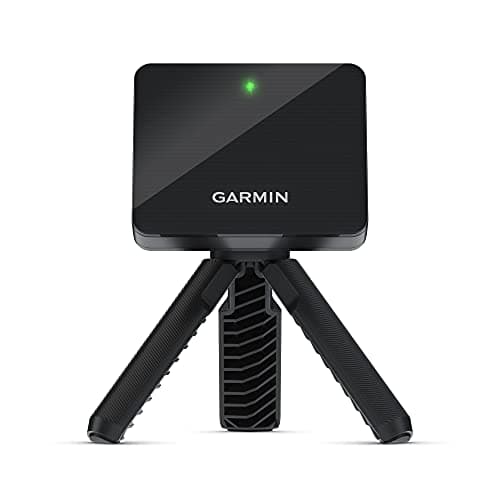
Then the field narrows sharply and the ranking above inverts. The Garmin Approach R10is the pick: Garmin’s basic Garmin Golf app tier is free, so you can read your own numbers forever without paying again, and the paid tier buys simulator course play rather than access to your data. The PRGR HS 130-Agoes further and has no app at all: ball and club speed, smash factor and distance appear on the unit’s own screen, and there is literally nothing to subscribe to. It is also the narrowest device here by a wide margin — no carry mapping, no spin, no simulator.
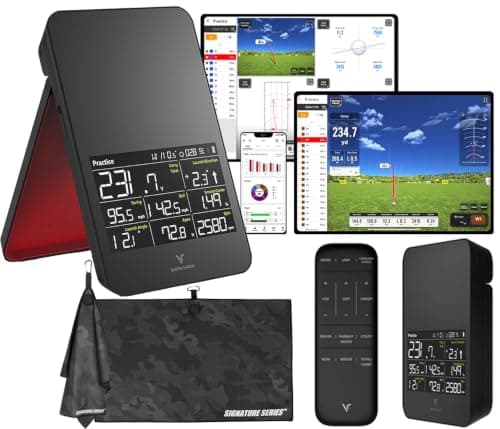
The Voice Caddie SC4 Pro is the interesting middle: a standalone unit with its own 5.3-inch display and voice output, eight listed data parameters and five included E6 simulation courses, which means some course play arrives in the box rather than on a plan. The FlightScope Mevo similarly includes some E6 courses, with eighteen listed data parameters and a ball sticker requirement that is more friction in practice than it reads on a spec sheet. The full fee-by-fee breakdown across the category is in best launch monitors with no subscription.
What none of these replaces
The SkyTrak+ is built around being a fixed instrument in a dedicated bay: it sits beside the ball, reads it in the first inches of flight, and copes with indoor space that defeats a radar. Nothing on this page replaces that geometry. A doppler unit needs the maker’s published minimum distances behind the ball and to the target, and a short garage can simply beat it regardless of which brand is on the box. If your bay is tight, the constraint is physics and not budget — measure before you choose, using what a home setup costs and best golf hitting nets for a garage.
If you still want the original
Entirely reasonable, and worth saying on a page like this. If you are building a bay you intend to keep, and measured spin plus a published club-face data set is the point of the exercise, the SkyTrak+ is the unit designed for that job and the alternatives above are all compromises against it. The case for buying it, including what the membership tiers actually gate, is in our SkyTrak+ page, and the whole category ranked side by side is best golf launch monitors.
The arithmetic: three-year cost, including the plan
This is the only calculation that matters on this page, and it is the one the box price hides. Add the device price to three years of whatever plan you will actually use, then compare. A cheaper device on a plan can cost more over three years than a dearer device on a free tier, and that is not a hypothetical — it is the exact shape of the SkyTrak-versus-Garmin decision for a golfer who only ever wants to see their own numbers.
So answer one question before comparing any two prices above: will you play simulated golf, or will you practice? If you will practice — hit balls, read numbers, work on one of them — the free and fee-free tiers cover you completely and the cheapest honest unit here does the job. If you will play, the plan is not an add-on, it is the product, and you should price three years of it into every row in the table.
Measured versus estimated: when the difference bites
Estimated spin is derived from ball speed, launch angle and observed flight. It is good at telling you that something is wrong and poor at telling you which thing. A low, running 7-iron could be a launch problem or a spin problem, and a derived spin number cannot separate them because the flight it was derived from is the same flight you are trying to explain.
Measured spin can separate them, which is why it costs money. Whether you need it comes down to the question you are asking. “How far do I carry each club?” is answered well by radar. “Why does this club land soft and the next one run out?” wants a measurement. Buy for the question you actually have, and note that the answer to the first question is the one most golfers are genuinely after.
What a spin number is worth without a target
One caution that applies to every unit on this page and to the SkyTrak+ as well: a number is only useful against something. Spin of 6,800 rpm on a 7-iron means nothing on its own; it means something against your own previous session, or against a published tour average, or against the same club hit with a different ball. Which is to say the instrument is the cheap part of improving, and the expensive part is the practice plan you build around it.
The honest version of that argument, including the case for not buying any launch monitor, is in are launch monitors worth it, and the parameter-by-parameter explanation is in launch monitor data explained.
Why we do not print the price in the text
Every number for a unit we rank comes from the live Amazon listing through our price layer at the moment the page is served, behind a 48-hour freshness gate, stamped with the date above. The only dollar figures typed into the prose are ones their makers published and we did not set — Rapsodo’s retail partner’s $899.99 launch price for the MLM2XPRO, and the roughly $100 to roughly $600 a year range SkyTrak published across its own membership pages — each cited at the foot of this page, and each worth verifying before you budget.