Skip to content
Divot&Draw

The Numbers · Launch Monitors

TrackMan Alternatives

TrackMan publishes a starting price of USD 13,995. Six launch monitors ranked by which part of that you are actually trying to keep - and what the step down really costs.

By Stephen V.Updated How we rank
#ad

We earn a commission when you buy through our Amazon links, at no extra cost to you. It never changes our rankings — and we'll tell you when the cheaper ball or club is the better buy. How this works.

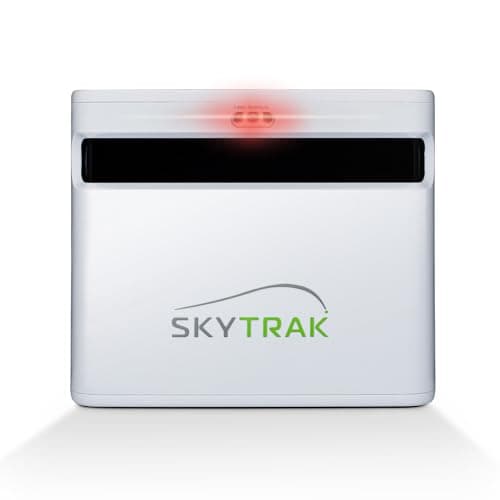
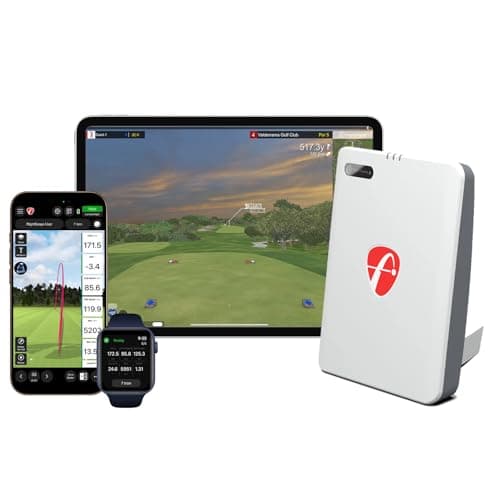
SkyTrak SkyTrak+ Launch Monitor & Golf Simulator
$995.00View on Amazon

$1,195.0017% off

Price as of November 22, 2026. Prices change — Amazon's is the one that counts.

#ad · we may earn a commission from this link to SkyTrak+ Launch Monitor & Golf Simulator

The closest alternative in kind for a dedicated home bay: a photometric camera alongside dual doppler radar, so spin is measured rather than inferred, with a published club-face data set.

Budget pick

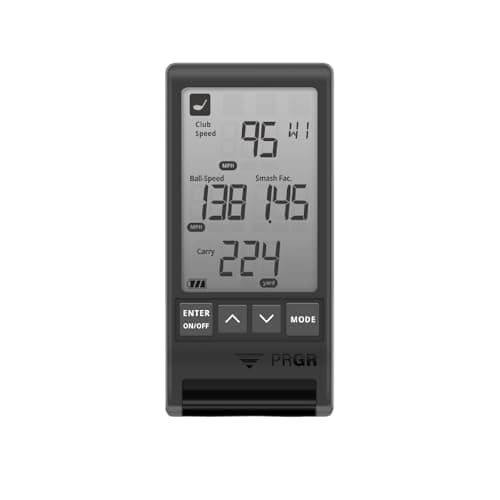
PRGR HS 130-A — the cheapest honest way to put a number on every swing — speed, smash factor and carry on its own screen, with no app and no subscription at all $179.99 on Amazon

The verdict: if you are replacing a TrackMan with something that does a similar job in a home bay, the SkyTrak+is the pick — SkyTrak publishes a photometric camera system alongside dual doppler radar, nine ball and five club data parameters, and spin that is measured rather than computed from the rest of the shot. Budget pick: the PRGR HS 130-A, which puts speed, smash factor and carry on its own LCD with no app and no subscription, for a tiny fraction of the money. Prices are live from our price layer, stamped November 22, 2026.

What TrackMan is actually known for

An alternatives page is worthless if it is not honest about the original, so here is TrackMan in TrackMan’s own published words, read on their site on November 20, 2026. Both of their golf launch monitors — the TrackMan 4 and the indoor-specific TrackMan iO — use what the company calls “patented optically enhanced radar tracking (OERT) technology to deliver world-leading accuracy.” TrackMan describes the 4 as “the little orange box that changed the game” and “the gold standard for golf simulators,” delivering “ultra-precise data on every aspect of club motion and ball flight.” The iO is “our first purpose-built product for the indoor game,” optimized for indoor golf. Software access is an annual subscription.

That is the benchmark the rest of this page is measured against, and none of it is marketing fluff: this is the equipment class used for club fitting and professional instruction, and the reason you see it on tour practice ranges. We are not going to talk it down to sell you something cheaper.

The reason people search for an alternative is almost always the number on TrackMan’s own golf page: “Starting at USD 13,995.”Their launch-monitor page carries no price at all, only “we’ll work with you to identify the best option for your needs, location and budget.” Every unit ranked below costs a small fraction of that figure, and the useful question is not “which is closest” but which part of a TrackMan are you actually trying to keep? There are three honest answers.

Three reasons to look for an alternative, and the unit for each

  • “I want measured ball data in a room at home.” This is the SkyTrak+ case, and it is the closest thing here to a like-for-like swap. Photometric camera systems sit beside the ball and read it optically at impact, which is why they cope with the short ball flight of an indoor bay. SkyTrak publishes measured back spin and side spin plus club head speed, smash factor, club path, face angle and face-to-path — a club data set, not just a ball one. The catch is the plan: a free Basic membership ships with the unit, but course play and the game-improvement tools sit on paid annual tiers, so budget for a subscription here exactly as you would with the original.
  • “I want to take it to the range.” Portability is where the consumer radars win outright, and a TrackMan is not what you carry to a bucket of balls. The FlightScope Mevo comes from a company that has built professional radar for years and publishes 18 data parameters; the Garmin Approach R10 is the value all-rounder whose basic app is free; the Voice Caddie SC4 Pro is the one with its own 5.3-inch screen so you never touch a phone. All three read the ball in flight, which is also their limitation — see the next section.
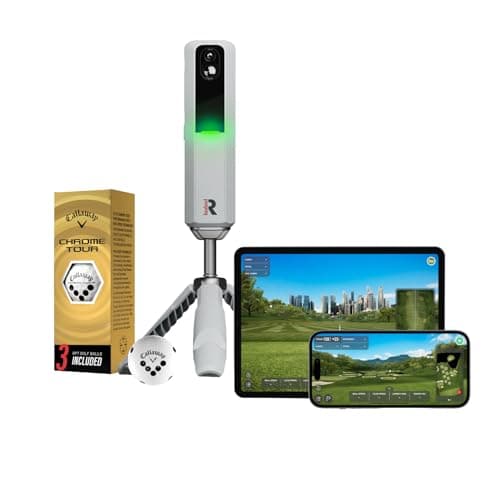
  • “I want the spin number, not the price tag.” Measured spin is the single most expensive thing on a spec sheet, and exactly two units here have it: the SkyTrak+ through its camera, and the Rapsodo MLM2PRO, whose camera measures spin and records shot video at well under half the SkyTrak’s money. If your problem is that your wedges do not stop, the MLM2PRO is the cheapest tool that will actually show you why. One timing note: Rapsodo announced its successor, the MLM2XPRO, on October 9, 2026 with orders from October 15 at $899.99, and the MLM2PRO stays supported in the apps as the cheaper of the two.

What you give up stepping down, stated plainly

Four things, and only one of them is likely to matter to you.

1. Measured versus computed. This is the real dividing line in this category, and it matters more than any brand argument. A unit that measures a parameter reads it directly; a unit that computes it derives it from what it did measure. All six monitors here give you ball speed, launch and carry you can practice against. Only two measure spin. The FlightScope Mevo needs a metallic sticker on the ball to read spin at all, which is fine on the range and tedious at volume. If you are buying a launch monitor to diagnose spin, buy a unit that measures it.

2. Indoor space. Radar units read the ball after it leaves the face, so they want flight to look at. Put one in a garage where the ball is in a net six feet later and you have given it less to work with. TrackMan’s answer to this is a purpose-built indoor product; in this price class, the answer is a camera-based unit, which is another reason the SkyTrak+ heads the list. Measure your space before you choose a technology — the full comparison is in photometric vs radar launch monitors.

3. Club-motion detail. TrackMan’s own claim for the 4 is data on every aspect of club motion. Down here you get a subset: smash factor almost everywhere, club path and face angle on the SkyTrak+, not much beyond club speed on the cheapest units. If you are fitting clubs for other people, that gap is your job and this page is not for you.

4. The ecosystem. Professional installs come with support, calibration and teaching software that a consumer-tier unit and its app do not pretend to match. Worth knowing, rarely worth paying for if you are one golfer in a garage.

Skip this: buying accuracy you cannot use

Here is the argument, built entirely from TrackMan’s own published numbers. TrackMan publishes Combine driver ball-speed averages for male amateurs of 161 mph for a scratch player, 147 mph at a 5 handicap, 138 mph at a 10, 133 mph for the average golfer at 14.5 and 131 mph for a bogey golfer, against 171 mph on the PGA Tour and 143 mph on the LPGA Tour.

Read that spread again. The gap between an average golfer and a scratch player is about thirty miles an hour of ball speed, and the gap between your own good drive and your own bad one is bigger than any measurement difference between the units on this page. If you are swinging at 133 mph of ball speed, the thing standing between you and better golf is not the last decimal place of a spin reading — it is the fifty reps a week you are not doing because you have not bought anything yet. The honest trade at this level is to spend a fraction of the benchmark’s price, get numbers that are consistent enough to practice against, and put the difference into balls, lessons and a net. Whether any of it helps is the question we answer in are launch monitors worth it.

The flip side is equally honest: if you fit clubs, teach for money, or your shot pattern is already tight enough that a one-degree face-angle change shows up, the professional tier exists because that work needs it. Buying down in that situation is a false economy.

Where these sit against each other

This page is the shortlist; we have run most of these units head to head individually, and the detail lives there: MLM2PRO vs Garmin R10, R10 vs FlightScope Mevo, MLM2PRO vs Mevo, R10 vs Voice Caddie SC4 Pro and PRGR vs R10. If a price ceiling rather than the TrackMan comparison is what is deciding this purchase, start with best launch monitors under $1,000, and if the monitor is only one part of what you are building, our complete simulator builds under $1,000 put the whole room inside one budget.

One tier down, the same exercise against this page’s own winner is SkyTrak alternatives— what you give up when the SkyTrak+ is the unit you are trying to replace.

The short answer

Quick picks

#ProductBest forScorePrice
01
SkyTrak SkyTrak+ Launch Monitor & Golf Simulator
SkyTrak+ Launch Monitor & Golf Simulator

The photometric step up — measured spin and a real club-face data set — at several times a pocket radar's price, with course play behind a paid plan.

A dedicated home bay where measured spin matters
7.4
$995.00Amazon
02
FlightScope FlightScope Mevo (Gen2)
FlightScope Mevo (Gen2)

A pocket radar from a serious launch-monitor name, with 18 data points and a few sim courses in the box.

Range practice with pro-lineage radar
7.8
$1,149.00Amazon
03
Rapsodo Rapsodo MLM2PRO
Rapsodo MLM2PRO

Camera-plus-radar with shot video — the data is richer, but the best of it lives behind a subscription, and this is now the outgoing model with the MLM2XPRO arriving above it.

Players who want video and measured spin
7.4
$399.98Amazon
04
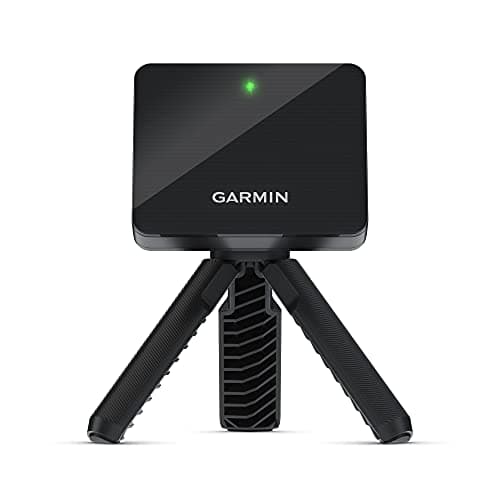
Garmin Garmin Approach R10
Garmin Approach R10

The portable radar that made launch data affordable — and its basic app is genuinely free.

Most golfers who want data without a subscription
8.0
$499.99Amazon
05
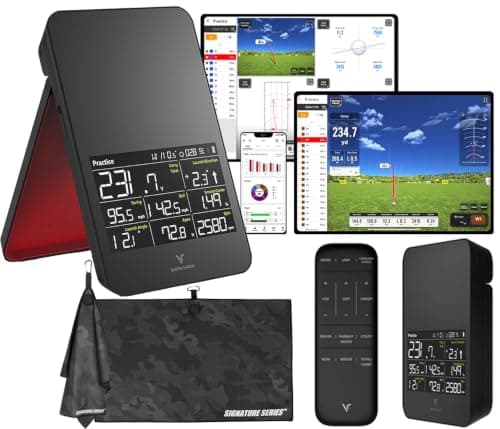
Voice Caddie Voice Caddie SC4 Pro
Voice Caddie SC4 Pro

A standalone launch monitor and simulator bundle with its own screen — no phone required to read your numbers.

A self-contained monitor-plus-sim bundle
7.2
$504.99Amazon
06
PRGR PRGR HS 130-A
PRGR HS 130-A

A pocket doppler that does one thing — speed and smash — with no app, no subscription, no fuss.

Speed and smash factor, subscription-free
8.0
$179.99Amazon

#ad · Live prices from the Amazon Product API, as of November 22, 2026. Where we have no verified live price, we show none — we would rather leave a gap than print a number that has rotted.

In detail

The picks, in full

01
SkyTrak SkyTrak+ Launch Monitor & Golf Simulator

A dedicated home bay where measured spin matters

SkyTrak+ Launch Monitor & Golf Simulator

Dual doppler radar + photometric camera9 ball + 5 club data parameters (published)Rechargeable Li-Po, ~4 hr (published)Free Basic tier; course play needs a paid plan
7.4/10

The photometric step up — measured spin and a real club-face data set — at several times a pocket radar's price, with course play behind a paid plan.

Accuracy
9
Data depth
9
Ease of use
7
Portability
6
Value
6

Pros

  • Pairs dual doppler radar with a photometric camera, so back spin, side spin and shot shape are read rather than inferred from ball flight alone
  • Publishes a genuine club data set — club head speed, smash factor, club path, face angle and face-to-path — which no pocket radar on this site reports
  • Built to drive real simulator course play indoors, not the cut-down sim function bundled with a range unit

Cons

  • The membership is the real cost: a free Basic tier covers the driving range, but course play and the game-improvement tools sit behind paid annual plans
  • Amazon now lists it as the previous generation alongside SkyTrak's newer ST MAX, so you're buying the outgoing model — good for the price, less good if you want the latest hardware
  • A ~4-hour battery and a camera that has to sit level beside the ball make it a set-up-a-bay unit rather than a grab-and-go pocket radar

Skip this if…

…your budget stops around the price of a portable radar, or a recurring fee is a deal-breaker. The SkyTrak+ costs several times a pocket doppler and its course play is tied to a paid annual plan — the free-app Garmin R10 or the fee-free PRGR are the honest answers for that buyer.

$995.00View on Amazon

$1,195.0017% off

Price as of November 22, 2026. Prices change — Amazon's is the one that counts.

#ad · we may earn a commission from this link to SkyTrak+ Launch Monitor & Golf Simulator

02
FlightScope FlightScope Mevo (Gen2)

Range practice with pro-lineage radar

FlightScope Mevo (Gen2)

Doppler radar18 data parameters (listed)Includes some E6 coursesRequires ball sticker
7.8/10

A pocket radar from a serious launch-monitor name, with 18 data points and a few sim courses in the box.

Accuracy
8
Data depth
8
Ease of use
7
Portability
9
Value
7

Pros

  • Comes from FlightScope, whose radar technology underpins far pricier professional units
  • The listing quotes 18 data parameters — plenty for a full, honest practice session
  • Ships with a handful of E6 simulator courses, so you can play at home and not just practice

Cons

  • Needs a small metallic sticker on the ball for full data — fiddly, and the stickers are a consumable
  • The wider simulator experience still points you toward paid E6 content beyond the included courses

Skip this if…

…you want a grab-and-go unit with nothing to stick on the ball, align or upgrade. The sticker requirement and the paid-course upsell make it less friction-free than a pocket speed monitor like the PRGR.

$1,149.00View on Amazon

$1,299.0012% off

Price as of November 22, 2026. Prices change — Amazon's is the one that counts.

#ad · we may earn a commission from this link to FlightScope Mevo (Gen2)

03
Rapsodo Rapsodo MLM2PRO

Players who want video and measured spin

Rapsodo MLM2PRO

Camera + radarShot video replayMeasured ball spinSubscription tier for full data/sim
7.4/10

Camera-plus-radar with shot video — the data is richer, but the best of it lives behind a subscription, and this is now the outgoing model with the MLM2XPRO arriving above it.

Accuracy
8
Data depth
8
Ease of use
7
Portability
8
Value
6

Pros

  • Combines a camera and radar, and records video of each shot you can review afterwards
  • Measures ball spin from the ball's markings rather than estimating it the way a pure radar does
  • Doubles as a practice tool and a simulator front-end for home course play

Cons

  • The full data set and the simulator features sit behind a paid membership — budget for the yearly cost, not just the box
  • Like any camera unit, it wants decent lighting and careful alignment to read consistently
  • Superseded: Rapsodo announced the MLM2XPRO on October 9, 2026 (orders from October 15 at $899.99) adding simulation putting, an on-unit LED display and faster feedback. The MLM2PRO stays supported and is now the cheaper buy — but check the discount is real before paying close to XPRO money for it

Skip this if…

…you refuse to pay an annual fee. The MLM2PRO's headline features — the full data set and the simulator — are tied to a membership, so a no-subscription unit like the PRGR or the free-app Garmin R10 fits a subscription-averse buyer better.

$399.98View on Amazon

$699.9943% off

Price as of November 22, 2026. Prices change — Amazon's is the one that counts.

#ad · we may earn a commission from this link to Rapsodo MLM2PRO

04
Garmin Garmin Approach R10

Most golfers who want data without a subscription

Garmin Approach R10

Doppler radarUp to ~10 hr batteryFree Garmin Golf basic appOptional paid sim (Home Tee Hero)
8.0/10

The portable radar that made launch data affordable — and its basic app is genuinely free.

Accuracy
7
Data depth
7
Ease of use
8
Portability
9
Value
9

Pros

  • About the lowest-cost way into real launch numbers, and the basic Garmin Golf app is free to use
  • Small, battery-powered and tripod-mounted — set up in about a minute indoors or at the range
  • Covers the metrics most improving golfers actually use: ball speed, club speed, launch and estimated carry

Cons

  • Radar estimates some numbers (spin in particular) rather than measuring them directly, so treat those as guidance
  • The at-home simulator courses need a paid subscription — the free tier is data, not a full simulator

Skip this if…

…you want measured spin and a library of simulator courses without ever paying a subscription. The R10 leans on estimated spin and gates the sim behind a yearly fee — a camera unit or a bundled-sim monitor may suit you better.

$499.99View on Amazon

Price as of November 22, 2026. Prices change — Amazon's is the one that counts.

#ad · we may earn a commission from this link to Garmin Approach R10

05
Voice Caddie Voice Caddie SC4 Pro

A self-contained monitor-plus-sim bundle

Voice Caddie SC4 Pro

Doppler radar5.3" built-in display with voice output (listing)8 data parameters (listing)5 included E6 simulation courses (listing)
7.2/10

A standalone launch monitor and simulator bundle with its own screen — no phone required to read your numbers.

Accuracy
7
Data depth
7
Ease of use
8
Portability
7
Value
7

Pros

  • Works as a self-contained unit with its own display, so you're not tethered to a phone app to see your data
  • Sold as a monitor-and-simulator bundle, so home course play is part of the package rather than an add-on
  • Portable enough to move between the range and an indoor net

Cons

  • Less widely reviewed than the Garmin and Rapsodo, so there's a smaller body of owner feedback to lean on
  • As with any radar, some figures are modeled rather than directly measured

Skip this if…

…you specifically want shot video or measured spin. Its strength is being a tidy all-in-one; if camera video is the feature you care about, the Rapsodo is the unit built around it.

$504.99View on Amazon

$599.9916% off

Price as of November 22, 2026. Prices change — Amazon's is the one that counts.

#ad · we may earn a commission from this link to Voice Caddie SC4 Pro

06
PRGR PRGR HS 130-A

Speed and smash factor, subscription-free

PRGR HS 130-A

Doppler radarBall & club speed, smash, distanceNo app or subscriptionPocket-sized, battery-powered
8.0/10

A pocket doppler that does one thing — speed and smash — with no app, no subscription, no fuss.

Accuracy
7
Data depth
5
Ease of use
9
Portability
10
Value
9

Pros

  • Zero running cost — no app account, no membership, nothing locked away behind a fee
  • Point it down the line and swing; the on-unit screen shows ball speed, club speed, smash and estimated distance instantly
  • Small and cheap enough to live in the bag and check your speed anywhere

Cons

  • It reads speed metrics only — no launch angle, no spin, no simulator — so it's a speed trainer, not a full monitor
  • No shot video, no course play, and no data history beyond the last few shots

Skip this if…

…you want carry-mapping, spin numbers, or a simulator to play courses at home. The PRGR is deliberately narrow — excellent for speed work, useless if you wanted the full launch picture.

$179.99View on Amazon

$229.9922% off

Price as of November 22, 2026. Prices change — Amazon's is the one that counts.

#ad · we may earn a commission from this link to PRGR HS 130-A

The subscription is part of the price — on both sides

TrackMan publishes software access as an annual subscription, and it is easy to assume that stepping down escapes the recurring cost. It does not, automatically. The SkyTrak+ ships with a free Basic membership but puts course play and the improvement tools on paid annual tiers; the Rapsodo MLM2PRO puts much of what buyers came for behind a membership; the Garmin R10’s basic app is free with course play on a paid tier; the Voice Caddie SC4 Pro bundles simulation courses in the box; the PRGR has no software, no account and no fee of any kind.

So the comparison that matters is three-year cost, not sticker price, and it reorders this page. Decide first whichproduct you are buying — a practice-data station, a course-play simulator, or a speed trainer — because those have very different recurring costs and only one of them is zero. We do the full line-item math, including the net, the mat and the laptop, in what a home setup costs, and the units with no fee at all are collected in launch monitors with no subscription.

How to judge a cheaper monitor without fooling yourself

Accuracy is not the only thing that makes data useful; consistency does most of the work. A unit that reads your 7-iron two yards short every single time is perfectly good for practice, because you are comparing your swings against each other, not against a tour average. A unit that scatters the same swing across a ten-yard range is useless at any price.

So test for repeatability, not for truth: hit ten balls with the same club and look at the spread of the numbers rather than their absolute values. Do it in the space you will actually use, because that is where a radar unit either has room to work or does not. And ignore the single long drive the app shows you — the number that improves your golf is the median, and the number that flatters you is the maximum.

Why we do not print our own prices in the text

The only dollar figures in the text above are ones their makers published and we did not set — TrackMan’s own starting price and Rapsodo’s launch price for the MLM2XPRO — each quoted with its source cited below. Every price for the units werank comes from the live Amazon listing through our price layer at the moment the page is served, behind a 48-hour freshness gate, stamped with the date above. This category discounts steeply and unpredictably as generations turn over — one unit on this page is cheaper today than it was a fortnight ago — so a number typed into a sentence would be misleading within weeks. Read the table, not our prose, for what anything costs.
How we ranked this

We don't run a testing lab — and we say so

We compiled published manufacturer specifications, official standards and aggregated owner reviews, computed the running costs the big test-labs leave out, and scored each pick against a published rubric. The scores are judgments from documented research — they are not lab measurements we took, because we don't have a lab and we're not going to pretend we do. You can check every number we publish.

Questions

Frequently asked

What is the cheapest TrackMan alternative?
The PRGR HS 130-A, by a wide margin — a doppler radar that shows ball speed, club speed, smash factor and carry on its own screen with no app and no subscription. It does not play courses and does not measure spin, and for speed work and strike consistency it is genuinely enough. Live prices for all six picks are in the table above.
Is the SkyTrak+ as accurate as a TrackMan?
Nobody can honestly answer that from published material, and we are not going to invent a comparison. What is published is the method and the data set: TrackMan uses what it calls optically enhanced radar tracking and claims world-leading accuracy, while SkyTrak publishes a photometric camera plus dual doppler radar with measured back and side spin and five club parameters. The SkyTrak+ is the closest alternative in kind at a small fraction of the price — not a replacement for a professional fitting install.
Which cheap launch monitors measure spin instead of estimating it?
Two on this page: the SkyTrak+ and the Rapsodo MLM2PRO, both through a camera. The FlightScope Mevo reads spin only with a metallic sticker on the ball. The Garmin R10, the Voice Caddie SC4 Pro and the PRGR do not measure it. If spin is the reason you are shopping, that distinction is the whole decision — more in launch monitor data explained.
Will a consumer launch monitor work indoors in a garage?
A camera-based unit will cope better than a radar one, because radar needs ball flight to read and a garage gives it a few feet. TrackMan’s own answer to this problem is a separate indoor-specific product. Measure the distance from your ball to the net and your ceiling height at the top of your backswing before you choose, and read photometric vs radar first.
Do I need a TrackMan for lessons or club fitting?
If you are the one giving the lessons or doing the fitting, that equipment class exists because the work needs it, and buying down is a false economy. If you are one golfer practicing in your own space, you are paying for precision your shot pattern cannot use yet — TrackMan's own published amateur ball-speed averages make that case better than we can.

Keep reading

Receipts

Sources

We do not run a testing lab, and we do not pretend to. Every spec number here comes from a manufacturer's published sheet or an official standard, cited above. Where we could not verify something, we say so on the page rather than quietly leaving it out. Read our full method.