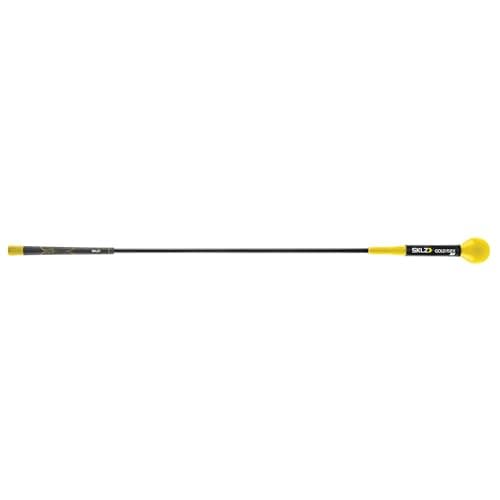
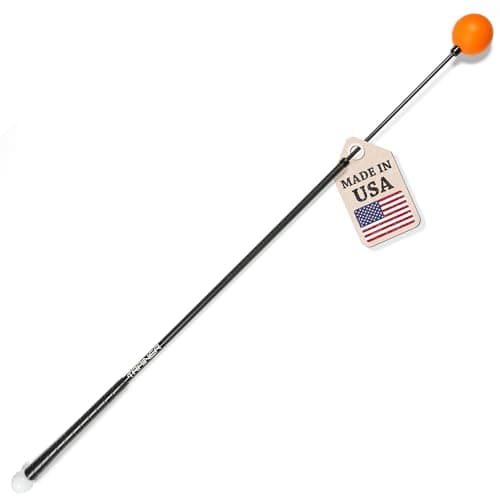
The best golf training aid for a senior golfer is the Orange Whip Swing Trainer— a counterweighted flexible shaft that trains tempo and sequencing while doubling as the best warm-up tool in golf, which for a player over sixty is arguably the more valuable half. The reasoning behind this whole page is specific: the strokes a senior golfer can realistically get back are not in swing speed chased through a gym program. They are in range of motion, in tempo and sequencing, and above all in the short game, where nothing about aging costs you anything at all. The five picks below are ranked on that logic, not on which aid is the most popular.
What actually changes, and what does not
Be clear-eyed about the mechanism, because the industry is not. What tends to decline with age is rotational range of motion through the torso and hips, and the ability to produce force quickly. What does not decline is your ability to read a green, control the pace of a putt, hit a square strike, aim correctly, or keep your tempo consistent. So the honest hierarchy for a senior golfer is: protect and extend your rotation, keep your tempo smooth and repeatable, and spend most of your practice time inside a hundred yards where the scoring is.
That hierarchy is also why this page does not lead with an overspeed training system. Overspeed protocols are real training with real published evidence behind them, and they are also a prescribed three-sessions-a-week commitment on non-consecutive days. For some senior golfers that is exactly the right purchase — our SuperSpeed review covers it properly and our tempo trainer roundup compares the weighted-shaft field. For most, a flexible-shaft trainer used as a warm-up before every round delivers more of the benefit for a fraction of the compliance cost.
How we ranked these (the criteria)
- Does it address something that actually declines? Rotation, tempo and sequencing score highest. Aids that train things aging does not take away score lower, with the deliberate exception of the putting tools, because putting is where the strokes are.
- What it asks of your body. An aid that requires repeated full-speed swings is a different proposition at seventy than at thirty. We say plainly what each one demands.
- Immediate, unambiguous feedback. An aid that tells you on the spot whether you did the thing right is worth several that need a coach to interpret.
- Does it survive first contact with real life? Aids that need a net, a garage, forty minutes and a setup ritual get used twice. Aids you can keep by the door get used.
- Hand and joint comfort. Grip pressure and hand pain change what a golfer can hold onto. The grip trainer is on this page for that reason and no other.
Scores are judgments from published manufacturer specifications, documented training protocols and aggregated owner feedback against our rubric— not measurements we took. We do not run a lab and we have not tested these on a sample of senior golfers; where we say something works, it is because the mechanism is documented, not because we measured it.
The five, and who each one is for
| Aid | What it trains | What it asks of you | Who it is for |
|---|
| Orange Whip | Tempo, balance, sequencing, rotation | Smooth swings, no ball, no net | Every senior golfer — and as a pre-round warm-up |
| SKLZ Gold Flex | Tempo and golf-specific flexibility | Same, at a lower price | The same job on a budget |
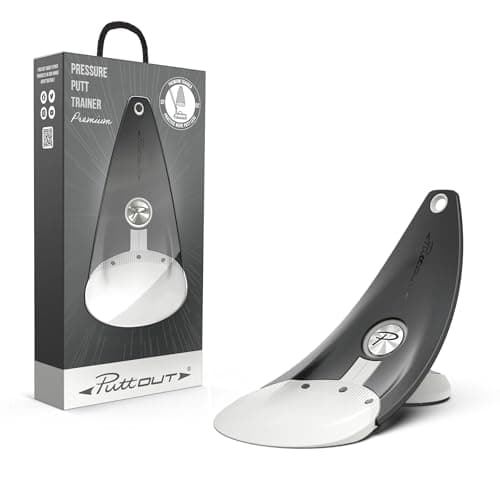
| PuttOut Pressure Putt Trainer | Pace and start line on short putts | A flat indoor floor and a putter | Anyone who three-putts — the biggest stroke saver here |
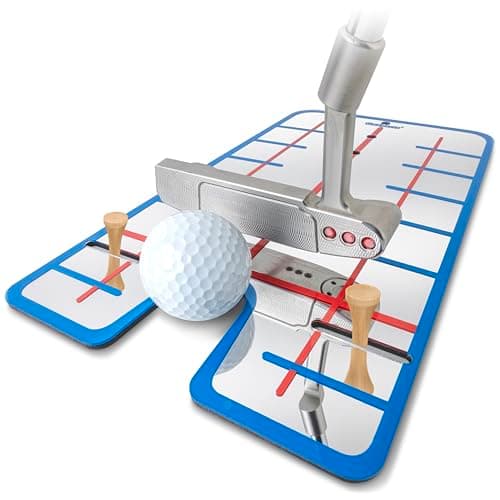
| GoSports Putting Mirror | Eye line, shoulder alignment, stroke path | Nothing physical at all | A setup that has quietly drifted over the years |
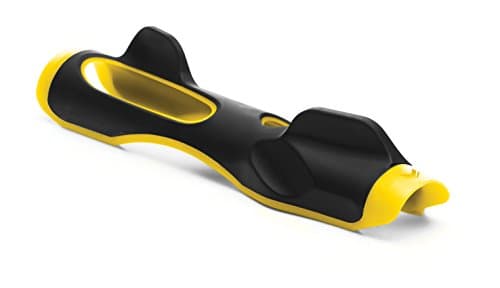
| SKLZ Grip Trainer | A neutral grip position | Slips onto a club; static reference | Sore or arthritic hands relearning a hold |
The warm-up is the real return on the top two picks
If you take one thing from this page: a flexible-shaft trainer swung for two minutes before you tee off does more for a senior golfer’s first three holes than any amount of range work after the round. Cold rotation is restricted rotation, and the opening holes are where a senior golfer most often gives away the strokes that define the card. Both the Orange Whip and the SKLZ Gold Flex do this job; the Orange Whip is the better-built tool with a free weighted head and a smoother load, the Gold Flex does the same work for noticeably less. Our head-to-head comparison settles which one is the better buy for you.
Hands, grips and the thing to fix before any aid
If your hands hurt, the grip trainer is the cheap part of the answer and new grips are the important part. A worn, hard grip forces more grip pressure, and grip pressure is the enemy of both comfort and tempo — an oversize or softer compound can change how a round feels more than any training tool in this category. Read our grips for arthritis guide and the grip size chart before you spend on training. Equipment that fits is not a substitute for practice, but it is the thing to get right first.
Where a senior golfer should actually spend practice time
Two of the five picks here are putting aids, and that is not padding. Putting is roughly 40% of the strokes in a round for most amateurs, it is entirely unaffected by losing rotational speed, and it responds faster to practice than anything else in golf. If you buy one aid off this page and you already own a warm-up tool, buy the PuttOut. Its parabolic ramp returns a holed-pace putt by exactly the distance it would have run past the hole, which converts pace control from a feel you cannot verify into a number you can see. The mirror is the companion buy: it checks the eye line and shoulder alignment that drift slowly over years of playing and that no amount of stroke practice fixes.