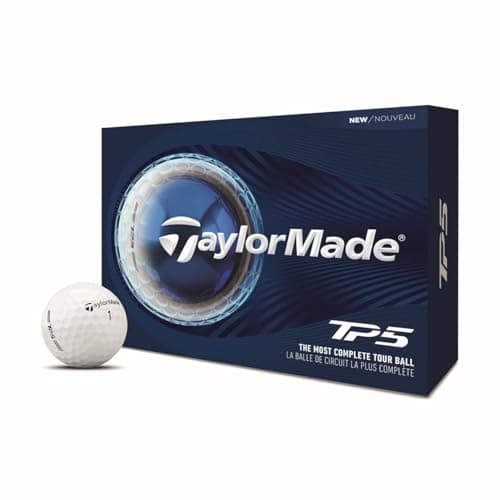
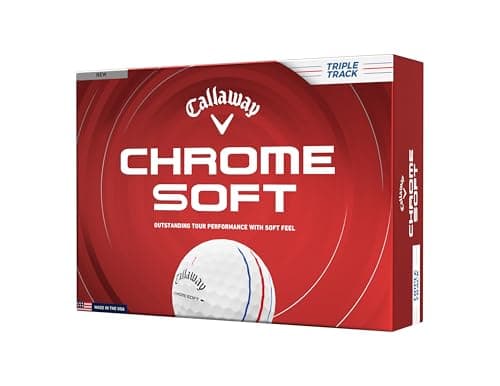
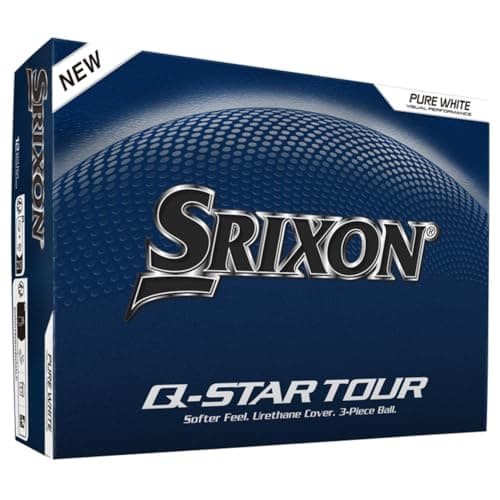
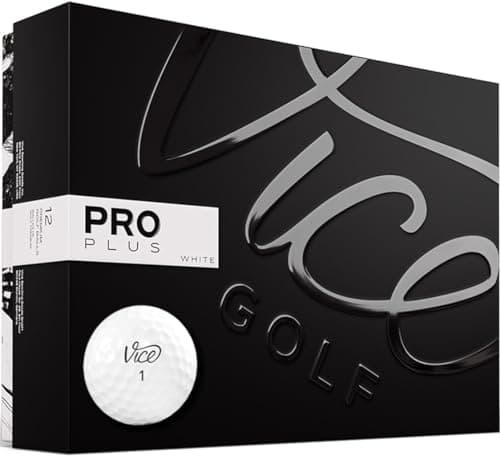
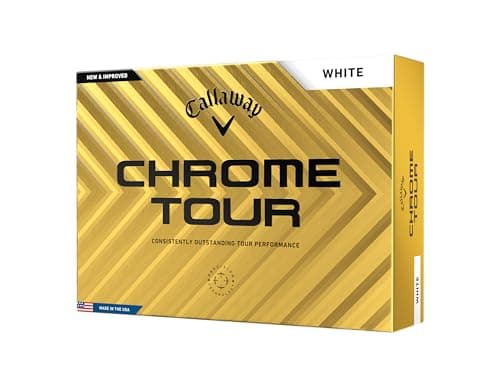
For the player who wants the closest like-for-like swap — a 4-piece urethane tour ball built for maximum short-game spin, from the brand with the most direct answer to the Pro V1.
Budget pickVice Pro Plus — the cheapest genuine cast-urethane tour ball here, and the biggest saving if you buy several dozen at a time $37.99 on Amazon
The verdict: the closest like-for-like alternative is the Callaway Chrome Tour — a four-piece urethane tour ball that Callaway builds for maximum short-game spin, and the pick for a player who wants the Pro V1’s job done by a different ball without changing what they expect from a wedge. Budget pick: the Vice Pro Plus, a direct-to-consumer cast-urethane tour ball that undercuts the majors and undercuts them furthest when you buy several dozen at once. Prices are live from our price layer, stamped November 18, 2026.
First, what the Pro V1 is actually known for, because an alternatives page is only useful if it is honest about the original. Titleist publishes the Pro V1 as a urethane-covered tour ball, and what it is known for in practice is consistency: the most predictable greenside spin and flight window of anything we rank, a cover that holds up reasonably well before it scuffs, and the fact that a huge number of golfers’ short games are calibrated to it. It is the top pick on our own spin roundup and we are not going to pretend otherwise to sell you something else. The reason people search for an alternative is almost always one of three specific complaints, and the right swap depends on which one is yours.
Three reasons to switch, and the ball for each
- “It costs too much and I lose balls.” The most common complaint and the easiest to solve. What you must not give up is the urethane cover — that is the property that creates greenside spin, and a cheaper ionomer ball is a different product, not a discount version of the same one. The cheapest genuine urethane options here are the Vice Pro Plus and the Srixon Q-Star Tour, and the Q-Star Tour’s mid compression suits a wider range of swing speeds than a firm tour ball does. We put the full arithmetic in are expensive golf balls worth it.
- “It feels too firm.” A real and underrated reason. The Callaway Chrome Soft is the answer: genuinely soft off the face while still holding urethane greenside spin, and a better feel match than the Pro V1 for a lot of moderate swing speeds. It is priced right alongside the Pro V1, so this is a feel swap and not a value play — and it is the one most likely to feel like an upgrade rather than a compromise.
- “My driver spins too much.” This is what the multi-layer tour balls are built for. TaylorMade states the TP5’s five layers are aimed at spinning less off the driver and more on wedges, which is exactly this complaint addressed as a design goal rather than a marketing line. It is a genuine tour-grade alternative at roughly the same money.
- “I just do not want to play what everyone else plays.” Entirely legitimate, and the TP5 and Chrome Tour are both established, full tour-grade balls rather than curiosities. Nothing about either is a step down.
The one swap that is not an alternative
Going from a Pro V1 to a soft two-piece ionomer ball is not switching alternatives, it is switching categories, and you should do it with your eyes open rather than by accident because something was on offer. The cover is the whole difference: urethane deforms around wedge grooves and lets them grip; harder ionomer slides across them. You will lose greenside bite and you will probably gain a little driver distance and a lot of durability.
For plenty of golfers that is the right trade — if you are reaching greens with a hybrid rather than a wedge, you are not hitting the shot urethane exists for, and our high-handicapper ball roundup is the honest page for you. But it is not a Pro V1 alternative and we are not going to list it as one. Everything ranked above keeps the cover material. That is the rule of this page.
How these compare one-to-one
This page is the shortlist; the head-to-heads are where the detail lives, and we have run most of these against the Pro V1 individually: Pro V1 vs Chrome Tour, Pro V1 vs TP5, Chrome Soft vs Pro V1, Q-Star Tour vs Pro V1 and Vice Pro Plus vs Pro V1. If you are choosing between the Pro V1 and the Pro V1x rather than leaving Titleist altogether, that comparison is here — the honest answer is often that the model, not the brand, was the mismatch.
Skip this: switching balls every round
The last honest point, and it costs nothing. Most of the benefit of a tour ball is that your short game learns how it behaves — how much it checks, how far it runs out, what a half wedge does. A golfer who plays a different ball every round never builds that calibration and gives away most of the advantage they paid for. Pick one of the balls above, play it for a season, and judge it on whether your up-and-downs improve rather than on how one shot felt. That is worth more than the difference between any two balls on this page. And if the ball you are actually leaving is the Callaway rather than the Titleist, the equivalent page is Chrome Soft alternatives, which runs on two rules rather than one.
How to test an alternative without fooling yourself
Ball testing is where confirmation bias does its best work, because the thing you are judging — feel — is exactly the thing your expectations change. Two rules make a comparison worth something. First, test on the shots where the ball is supposed to differ: full wedges into a green and chips around it, not drives. Driver carry differences between urethane tour balls are small and swamped by your own strike variation, so a tee-box test tells you almost nothing. Second, test in pairs on the same shot — one ball then the other to the same flag, several times over — rather than one ball this week and one next.
What you are looking for is a repeatable difference in how the ball behaves on the second bounce: does it check and stop, or release and run out? That is the whole value of the cover material and it is visible to the naked eye. If you cannot see a consistent difference across twenty wedge shots, you have your answer and it is the cheaper ball.
The buying pattern that saves the most money
Quantity, not brand. The direct-to-consumer options in this list get dramatically better value at multiple dozens, which is a real saving — but only if you will genuinely play through them, and only once you have decided on the ball. The sequence that wastes least money is to buy a single dozen each of two candidates, test them properly as above, then buy the winner in bulk for the season. Buying bulk first is how people end up with four dozen of a ball they have decided they dislike. We do not print prices in prose because they rot; the live figures and the date they were checked are in the table above.