For the golfer with average-to-faster swing speed who wants the most iron set this ceiling buys: a Callaway set whose own list price sits well above this page's cap, now selling under it.
The verdict: the Callaway Paradym Ai Smoke ironsare the most iron set seven hundred dollars buys right now — a set Callaway lists well above this page’s ceiling, selling under it, built on a face Callaway designed from the pre-impact swing data of thousands of real golfers. It comes with one honest condition: Callaway aims it at average-to-high swing speeds chasing distance and tighter dispersion, so if you are newer or slower, the Cleveland Launcher XL Halo at number two is the better set for you. Budget pick: the Wilson Dynapower irons, the cheapest full major-brand set here. Prices are live from our price layer, stamped November 18, 2026, and the under-seven-hundred cut is made against those numbers.
This page exists because the honest iron question is almost never “which irons are best” and almost always “what is the most set I can get for the money I have.” Our other iron pages sort by the golfer: beginners here, mid-handicappers there. A budget cuts across those categories, which is why the four sets below are a field that appears on no other page on this site — two come from our game-improvement ranking, two from our mid-handicap ranking, and both of those pages’ winners are absent from this one.
What decides an iron set under $700
Three things, in this order.
- Model year, not quality. This is the single most important thing to understand about buying irons at a ceiling. Every set below is a real major-brand set; what gets them under seven hundred dollars is that none of them is the newest thing in its maker’s catalog. Iron technology does not move in twelve-month steps the way marketing calendars do — a two-season-old game-improvement set is not two seasons worse, it is the same set with a discount attached. Paying the ceiling for last year’s flagship beats paying it for this year’s entry model nearly every time.
- Set composition. Check what you are actually getting before you compare prices, because “a set” is not a standard quantity. Some of these are 5-iron to pitching wedge; some add a gap wedge; some include a second wedge. A seven-piece set and a nine-piece set at the same money are not the same deal, and a missing gap wedge is a purchase you will make within a season anyway.
- Shaft material and weight. Steel or graphite is not a quality question, it is a speed question. Graphite is lighter, so it helps a slower swing generate clubhead speed and launch the ball; steel is heavier and gives a faster player more control. Two of the sets below publish a graphite option, and at this budget the shaft in the box matters more to your results than the badge on the sole. Our graphite vs steel shaft guide does that decision properly.
The ranking, and why the order is not the price order
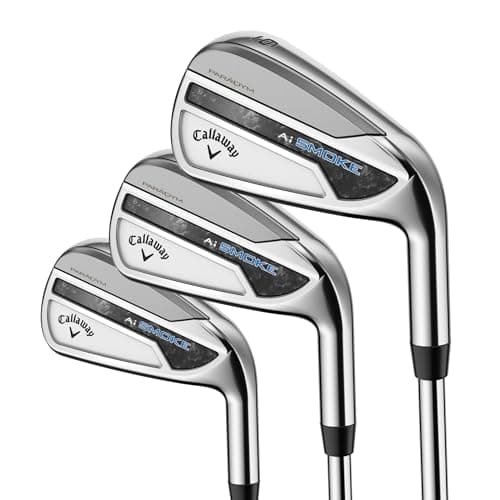
The Callaway Paradym Ai Smokewins on how much set the ceiling buys. Its own list price is a long way above this page’s cap, and the technology is not a rebadge: Callaway describes the Ai Smart Face as optimized from the pre-impact swing data — speed, delivery and face orientation — of thousands of real golfers, and the Dynamic Sole Design uses a pre-worn leading edge and variable bounce so the sole interacts with turf more forgivingly through a range of strikes. It ships with a True Temper Elevate steel shaft and a Lamkin grip. The condition is the one Callaway itself publishes: this is a set for average-to-high swing speeds looking for distance and dispersion, not the most forgiving thing here.
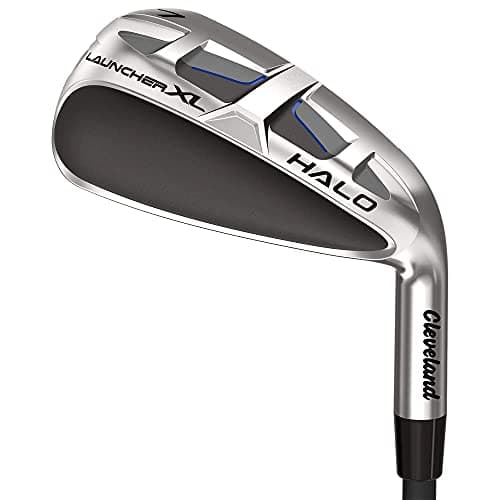
The Cleveland Launcher XL Halo is the most forgiving set under this ceiling and the pick for anyone still finding the middle of the face. Cleveland builds it around a MainFrame AI variable-thickness face and an oversized XL head, with hollow-bodied long irons and the Gliderail sole designed to stop a steep strike digging. It also publishes a graphite option on the 5-iron-to-dual-wedge set, which is the one spec on this page most likely to add distance for a moderate swing. If your miss is fat and thin rather than left and right, this is your set and the top pick is not.
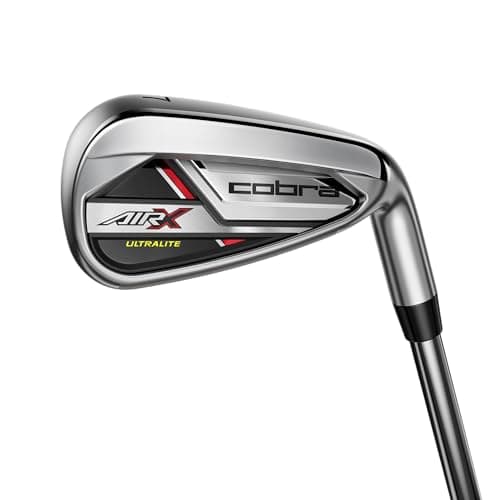
The Cobra Air-X 2 is the lightest, easiest set here and the one aimed at a specific miss. Cobra publishes a lightweight head, shaft and grip, offset and heel weighting for a draw bias, and an H.O.T. AI face insert. Translated: it is built to help a slower swing get the ball airborne and to pull a slice back toward the middle. That draw bias is a feature if you leak it right and a liability if you already draw the ball, which is the clearest buy/do-not-buy line on this page.
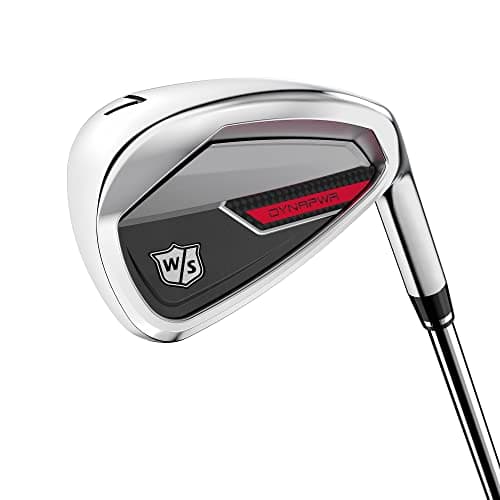
The Wilson Dynapoweris the budget pick and the best price-per-club on the page. Wilson’s published design story is variable face thicknesses and power holes that extend the hot area of the face from the center out toward the toe, where a large share of real strikes land, on an AI-designed face. It is a 5-iron to pitching wedge set plus a gap wedge, with lofts from 21 degrees to 47 degrees, and it offers a choice of a light steel shaft or a graphite one. Buy it and spend the difference on a wedge or a fitting rather than on a badge.
What you give up by capping at $700
Less than the catalogs want you to believe, and it is worth naming precisely. Above this band the money buys three real things: forged feel— a soft, dense sensation at impact that a cast game-improvement iron cannot reproduce and that genuinely matters to a good player; tungsten weighting and multi-material construction in the long irons, which buys a slightly steeper landing angle and a touch more consistency on the clubs that are hardest to hit; and the current model year, with the resale value and the fitting-cart availability that go with it.
What the extra money does notbuy is forgiveness. The most forgiving iron in our registry is not the most expensive one, and the cheapest set on this page will flatter a mis-hit more than a forged players’ iron at twice the money ever will. If forgiveness is what you are shopping for, this ceiling is not a compromise at all. Our how much to spend on clubs page puts that argument in order, and cavity back vs blade irons explains the construction behind it.
Skip this: buying a full set when you need two clubs
The most common way to waste seven hundred dollars on irons is to replace a set that was never the problem. If you already own a decent game-improvement set and your scores are leaking from 150 yards in, a new 5-iron will not fix it — a wedge you can actually control might. And if your current irons are only tired rather than wrong, new grips cost a tiny fraction of a set and change the feel of every club in the bag, which is why we keep when to replace grips one click away from every iron page.
A second honest case for not buying a set: if you are a brand-new golfer, a complete boxed set with a driver, a putter and a bag is better value than irons alone, and our best golf clubs under $500 page covers exactly that budget. Single-iron replacements are also a legitimate route for filling one gap, and our game-improvement iron ranking carries the two single irons in our registry for that purpose. They are not on this page because a single iron is not a set, and counting one here to make the list longer would be dishonest arithmetic.
The arithmetic: cost per club, and the two clubs you will add anyway
Iron sets are the one purchase in golf where the sticker price is almost meaningless until you divide it. A seven-piece set and a nine-piece set at the same money differ by a quarter on cost per club, and the gap is always in the scoring clubs — the gap wedge and the sand wedge are what get left out of the box. So do the division before you compare: take the live price in the table, count the heads you are actually getting, and then add the cost of the wedge you will buy within a season if the set does not include one.
That calculation changes the order of this page for some people, and it is meant to. A set that includes a gap wedge at the bottom of the band can be better value than a more celebrated set at the top of it, and if you are the kind of golfer who hits two wedges and a 7-iron more than anything else, that is where your money should go. Our wedge roundup is the honest companion purchase to every set on this page.
Used clubs: the other way to beat this ceiling
Seven hundred dollars in the used market buys a set that cost well over a thousand new, and for irons specifically that is a stronger argument than it is for drivers: an iron head has no moving parts, no battery and no adjustable hosel to seize, and a set with honest wear on the sole plays exactly as it did new once it is regripped. The risks are a bent lie angle nobody disclosed and a shaft that does not match your speed. We go through how to check both in used vs new golf clubs, and if you buy used, budget for a loft-and-lie check before you blame the irons for your misses.
Why we do not print the price in the text
Every number on this page comes from the live Amazon listing through our price layer at the moment the page is served, behind a 48-hour freshness gate, stamped with the date above. On a page whose entire premise is a price ceiling, a figure typed into a sentence is worse than useless: it goes stale within weeks and then quietly misleads every reader after that. If one of these sets drifts above the band, the table will tell you before we can edit the prose. Check the live figure rather than our sentence about it.