Skip to content
Divot&Draw

The Numbers · Launch Monitors

FlightScope Mevo Review

A pocket radar from a company whose technology underpins far pricier pro units. What its 18 data points and included sim courses get you — and the ball sticker you'll live with.

By Stephen V.Updated How we rank
#ad

We earn a commission when you buy through our Amazon links, at no extra cost to you. It never changes our rankings — and we'll tell you when the cheaper ball or club is the better buy. How this works.

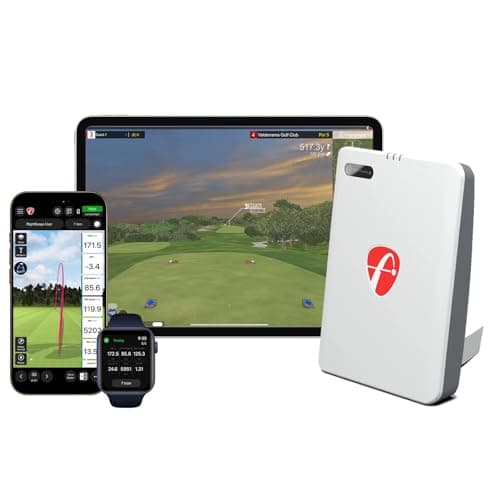
The FlightScope Mevo is the pocket radar with a serious pedigree. FlightScope builds the professional launch monitors used by coaches and tour players, and the Mevo brings that radar lineage down to a portable, battery-powered box you can carry to the range. It reads a listed 18 data parameters, ships with a handful of E6 simulator courses, and reads your shot with doppler radar — with one small catch you need to know about before you buy: it wants a metallic sticker on the ball for full data.

Who it’s for

It’s for the practicer who values the FlightScope name and wants a genuinely deep data set for honest range work — ball and club speed, smash, launch, carry and more — in a grab-and-go radar. If you want to run a full practice session on the numbers a coach would look at, and you don’t mind the sticker routine, it’s a lot of monitor for the money. It also dabbles in home simulation with its included E6 courses. It is notthe pick for someone who wants measured spin and shot video — that’s a camera unit’s job — or the absolute cheapest, friction-free speed check, which is the PRGR’s territory.

The pro-lineage radar advantage

The reason to choose the Mevo over a generic budget radar is the pedigree and the data depth. The same company’s technology sits inside launch monitors costing many times as much, and the Mevo’s listed 18 parameters are more than enough to diagnose a swing and track progress properly. For a player who wants trustworthy range numbers from a name that knows radar, that lineage is worth something — and it’s the same strength that lets it hold its own in our Rapsodo vs Mevo comparison and the R10 vs Mevo comparison.

The honest limits

Two things to accept. First, the ball sticker: the Mevo needs a small metallic dot on the ball for its full data, which is a mild hassle and a consumable you replace over time — less friction-free than a radar you just point down the line. Second, it’s a radar, so like the Garmin R10 it estimatesspin rather than measuring it optically, and there’s no shot video; if measured spin and replay matter to you, a camera unit like the Rapsodo is the better fit. The wider simulator experience also nudges you toward paid E6 content beyond the included courses. None of that makes it a bad tool — it makes it a serious pocket radar with a couple of quirks. We base this on FlightScope’s published specifications and how doppler radar captures a shot; we don’t run a testing lab.

The verdict

If you want a deep, trustworthy data set from a genuine launch-monitor name and you’ll live with a ball sticker, the Mevo is a superb range companion and a lot of radar for the money. If you want measured spin and video, look at a camera unit; if you want the cheapest possible speed check, buy the PRGR. Match it to how you actually practise, and it earns its place. Price the full picture — and any E6 add-ons — against the field in our cost-of-ownership breakdown.

The short answer

Quick picks

#ProductBest forScorePrice
01
FlightScope FlightScope Mevo (Gen2)
FlightScope Mevo (Gen2)

A pocket radar from a serious launch-monitor name, with 18 data points and a few sim courses in the box.

Range practice with pro-lineage radar
7.8
$1,299.00Amazon

#ad · Live prices from the Amazon Product API, as of Jul 26, 2026. Where we have no verified live price, we show none — we would rather leave a gap than print a number that has rotted.

In detail

The picks, in full

01
FlightScope FlightScope Mevo (Gen2)

Range practice with pro-lineage radar

FlightScope Mevo (Gen2)

Doppler radar18 data parameters (listed)Includes some E6 coursesRequires ball sticker
7.8/10

A pocket radar from a serious launch-monitor name, with 18 data points and a few sim courses in the box.

Accuracy
8
Data depth
8
Ease of use
7
Portability
9
Value
7

Pros

  • Comes from FlightScope, whose radar technology underpins far pricier professional units
  • The listing quotes 18 data parameters — plenty for a full, honest practice session
  • Ships with a handful of E6 simulator courses, so you can play at home and not just practice

Cons

  • Needs a small metallic sticker on the ball for full data — fiddly, and the stickers are a consumable
  • The wider simulator experience still points you toward paid E6 content beyond the included courses

Skip this if…

you want a grab-and-go unit with nothing to stick on the ball, align or upgrade. The sticker requirement and the paid-course upsell make it less friction-free than a pocket speed monitor like the PRGR.

$1,299.00View on Amazon

Price as of Jul 26, 2026. Prices change — Amazon's is the one that counts.

#ad · we may earn a commission from this link to FlightScope Mevo (Gen2)

Living with the ball sticker

The Mevo’s one real quirk is the metallic dot it wants on the ball for full data, so it’s worth being honest about what that means day to day. The stickers are cheap but they’re a consumable — you peel one on, it lasts a number of shots, and you top up the supply over time. For a dedicated range session that’s a minor ritual; for a quick grab-and-go check it’s more faff than a pocket speed monitor that needs nothing. If a sticker-free workflow is what you want, a PRGR (speed only) or a Garmin R10(full data, no sticker) avoids it — the trade is the R10’s app and the PRGR’s narrower data.

How it fits a home setup

The Mevo can anchor a modest home setup: it’s the brain that reads the shot, and its included E6 courses let you dabble in simulation out of the box. But remember a home setup is never one purchase — you still need a net to catch the ball and a mat to hit off, and more E6 content is a paid add-on beyond the bundled courses. If home course play is the real goal, price the whole station rather than just the monitor; our home simulator roundup walks through the pieces and where the money is best spent first.
How we ranked this

We don't run a testing lab — and we say so

We compiled published manufacturer specifications, official standards and aggregated owner reviews, computed the running costs the big test-labs leave out, and scored each pick against a published rubric. The scores are judgments from documented research — they are notlab measurements we took, because we don't have a lab and we're not going to pretend we do. You can check every number we publish.

Questions

Frequently asked

Is the FlightScope Mevo worth it?
For a practicer who wants a deep, trustworthy data set from a genuine launch-monitor name, yes — its 18 listed parameters and pro radar lineage make it a lot of monitor for the money. The caveats are the ball sticker it needs for full data and the fact that, as a radar, it estimates spin rather than measuring it. If those don't bother you, it's an excellent range companion.
Does the FlightScope Mevo need a ball sticker?
Yes — it uses a small metallic sticker on the ball for its full data, which is a mild hassle and a consumable you replace over time. Radars without a sticker requirement, like the Garmin R10, avoid it, but the Mevo’s pedigree and data depth are the trade-off.
Does the FlightScope Mevo measure spin?
Not directly — it’s a doppler radar, so it estimates spin from ball flight rather than measuring it optically the way a camera unit does. For measured spin and shot video you want a camera unit like the Rapsodo MLM2PRO; see the Rapsodo vs Mevo comparison.

Keep reading

Receipts

Sources

We do not run a testing lab, and we do not pretend to. Every spec number here comes from a manufacturer's published sheet or an official standard, cited above. Where we could not verify something, we say so on the page rather than quietly leaving it out. Read our full method.