Skip to content
Divot&Draw

The Distance · Rangefinders & GPS

Bushnell Rangefinder Alternatives

Bushnell sells four things: a fast confirmed lock, an external slope switch, a cart-bar magnet and a bright display. Six lasers ranked by which of them they give you back - and two that go further.

By Stephen V.Updated How we rank
#ad

We earn a commission when you buy through our Amazon links, at no extra cost to you. It never changes our rankings — and we'll tell you when the cheaper ball or club is the better buy. How this works.

Blue Tees Blue Tees Series 3 Max+
$179.98View on Amazon

Price as of November 22, 2026. Prices change — Amazon's is the one that counts.

#ad · we may earn a commission from this link to Blue Tees Series 3 Max+

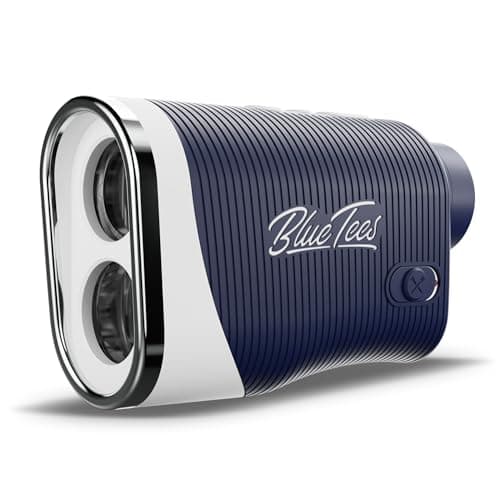
For the golfer who wants the Bushnell feature set rather than the Bushnell badge: a genuine slope switch you can flip off for competition, built-in magnetic plates for the cart bar, 6x glass and a pulse on a locked reading - three of the four things a Tour V7 Shift sells, for a fraction of it.

Budget pick

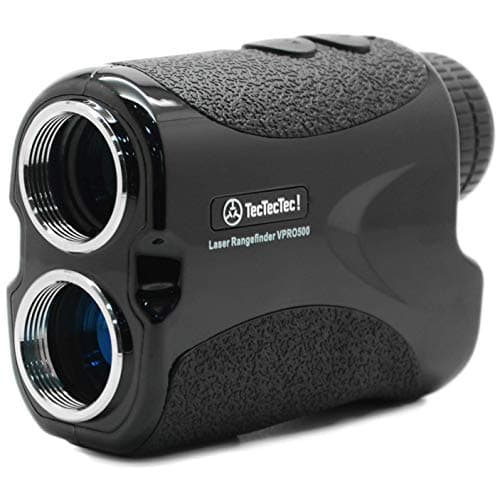
TecTecTec VPRO500 (Slope) — the cheapest laser here that still gives a real slope reading - what you give up is the magnet, the lock-confirmation pulse and a quick external toggle to get to a tournament-legal mode $89.99 on Amazon

The verdict: the Blue Tees Series 3 Max+is the Bushnell alternative most golfers should buy. Bushnell’s Tour line sells four things — a fast lock you can trust, an external Slope-Switch that makes the unit tournament-legal, the BITE cart-bar magnet, and good glass with a bright display — and the Series 3 gives you three of the four for a fraction of the money. Budget pick: the TecTecTec VPRO500, which keeps a real slope reading and gives up the magnet and the confirmation pulse. And if you are shopping because you cannot hold a Bushnell steady on the flag, two picks here do something no Bushnell laser in our registry publishes at all. Prices are live from our price layer, stamped November 22, 2026.

What you are actually replacing

“Bushnell” is not one product, it is a feature set, and knowing which part of it you care about is the whole decision. Across the three Bushnell lasers we rank, the published features are:

  • PinSeeker with Visual JOLT.A red ring flashes and the unit pulses the instant it locks the flag. This is the feature people actually mean when they say Bushnells are faster — not that the beam is quicker, but that you are told you succeeded, so you stop re-shooting the same flag.
  • Slope-Switch.An external switch that disables slope, so one unit covers casual rounds and competition. Under the Rules of Golf, a distance-measuring device may be used for distance but a device must not be used to gauge elevation change in a way the Rules prohibit — so a visible, external off switch is the practical answer. Detail: are rangefinders legal.
  • The BITE magnet. An integrated magnet that holds the unit on a cart bar between shots. Small, and used on every hole.
  • Display and glass. 6x on the Tour V7 Shift with a dual-color OLED and a published 5-to-500-yard flag lock; 7x on the Pro X3+ Link, which also adds Elements temperature and altitude compensation.

Which alternative replaces which feature

  • All four at once, roughly: the Blue Tees Series 3 Max+.Slope switch, magnetic plates, 6x glass and a pulse on a locked reading. The honest limit is the pulse: it fires on almost any ranged object rather than specifically on the flag, so it confirms a reading rather than proving it was the pin — which is a real step down from Visual JOLT, and the only one. Our review is here.
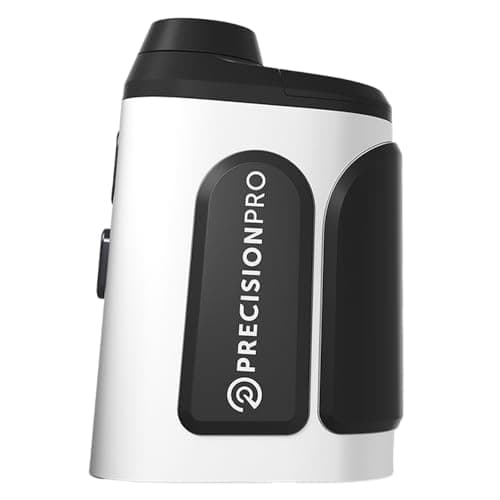
  • The magnet, plus a better warranty: the Precision Pro NX10 Slope.Precision Pro describes the magnet as one that grabs the cart bar and does not let go, slope is legal at the flick of a switch, and the brand bundles a three-year full-coverage warranty with a 90-day satisfaction guarantee — which is more cover than Bushnell publishes. It is also the heaviest unit here at a published 12 oz, which some golfers want and some do not.
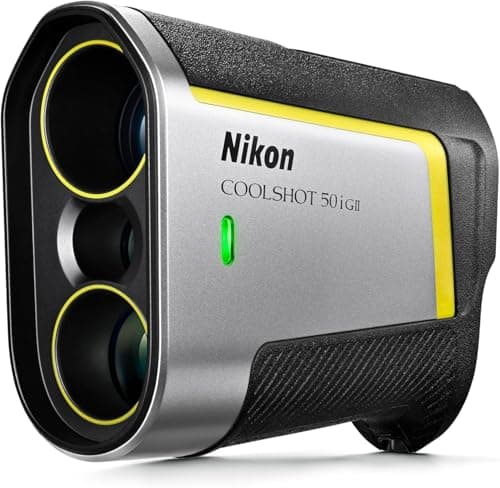
  • Lock confirmation, done differently: the Nikon COOLSHOT 50i GII. This is the closest thing to JOLT from another brand: Nikon says that when overlapping subjects are measured, the nearest is displayed with a red LOCKED ON sign in the viewfinder anda simultaneous brief vibration — two confirmations rather than one. It has a magnetic mount too, and ID slope that switches off with an external compliance light.
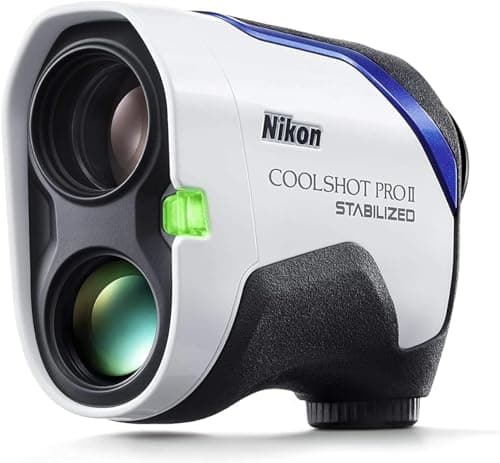
  • Something no Bushnell publishes: the Nikon COOLSHOT PROII STABILIZED. Nikon publishes that its STABILIZED function reduces viewfinder image vibration from hand movement to one fifth or less. If your problem is that you cannot hold the flag in the picture long enough to get a reading, that is the feature, and no Bushnell laser we rank has it. The trade: no magnetic mount.
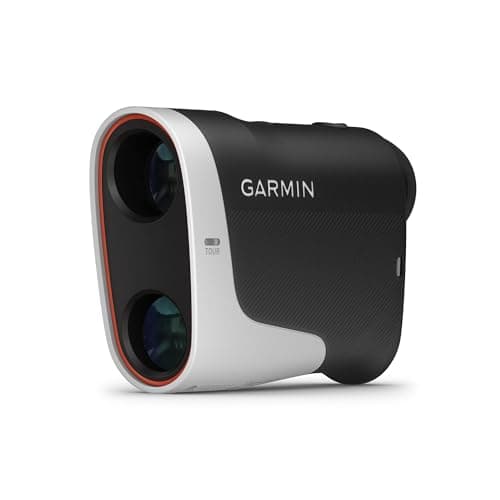
  • Stabilization plus a second screen: the Garmin Approach Z30.Image-stabilized 6x glass, vibration feedback on lock, and Range Relay, which pushes the measured distance to a paired Garmin watch or the Garmin Golf app — so the number survives you taking the laser away from your eye. Worth the money mainly if you already live in the Garmin ecosystem. Our review is here.

What you cannot replace from this list

Two things, said plainly. The first is Elements compensation— the Pro X3+ Link folds temperature and altitude into the slope number, and nothing else we rank publishes an equivalent. If that is genuinely why you were buying a Bushnell, buy the Bushnell; it is a tour-player refinement most amateurs will never see on a card, and we say so on the product itself, but it is a real feature and no alternative here has it.

The second is 7x magnification. Every alternative on this page is 6x, which is the category standard and perfectly adequate; the Pro X3+ Link is the only 7x unit in our registry. If picking a flag out of a tree line at distance is your problem, that is the spec, and again there is no substitute here.

If a laser is the wrong tool entirely

Worth raising on an alternatives page, because for some golfers the honest alternative to a Bushnell is not another laser. A laser requires you to aim a device at a target and hold it steady; a GPS unit requires neither. If aiming is the part that frustrates you, a watch or handheld gives you front, middle and back without a steady hand — the field is best golf GPS watches and best budget golf GPS, and the trade in full is rangefinder vs GPS.

If the trouble is specifically that your hands shake, the whole field ranked on that single axis — including the two GPS units that ask you to stop aiming altogether — is best golf rangefinders for shaky hands.

The short answer

Quick picks

#ProductBest forScorePrice
01
Blue Tees Blue Tees Series 3 Max+
Blue Tees Series 3 Max+

The value laser we’d point most golfers to first — a slope switch, 6x glass, a real magnet and a pulse lock, for a lot less than the big brands.

The best value laser
8.0
$179.98Amazon
02
Precision Pro Precision Pro NX10 Slope
Precision Pro NX10 Slope

The value pick, and the heavy one: a published 12 oz of body mass damps a mild shake all by itself, and a strong magnet means you never have to dig it out of a pocket.

A mild shake on a budget
7.8
$199.99Amazon
03
Nikon Nikon COOLSHOT 50i GII
Nikon COOLSHOT 50i GII

Nikon's 2025 mid-range laser: no stabilization, but Dual LOCKED ON QUAKE both buzzes and flashes when it has the flag, so you are told you succeeded instead of having to hold the picture and squint.

Lock confirmation without the stabilization premium
7.8
$196.95Amazon
04
Nikon Nikon COOLSHOT PROII STABILIZED
Nikon COOLSHOT PROII STABILIZED

The one rangefinder built for a hand that will not hold still: Nikon publishes the STABILIZED function as cutting viewfinder shake to one fifth or less, and nothing else near this price claims it at all.

Shaky hands, full stop
8.2
$296.95Amazon
05
Garmin Garmin Approach Z30
Garmin Approach Z30

Image-stabilized 6x glass plus Range Relay: it buzzes when it locks the flag, then throws the number onto your Garmin watch or phone so you never have to re-aim just to re-read it.

Stabilization plus a second screen
8.2
$399.99Amazon
06
TecTecTec TecTecTec VPRO500 (Slope)
TecTecTec VPRO500 (Slope)

The budget laser that started the value category — real slope, a quick pin lock, and a price that doesn’t sting if it lives at the bottom of a golf bag.

The budget slope laser
7.6
$89.99Amazon

#ad · Live prices from the Amazon Product API, as of November 22, 2026. Where we have no verified live price, we show none — we would rather leave a gap than print a number that has rotted.

In detail

The picks, in full

01
Blue Tees Blue Tees Series 3 Max+

The best value laser

Blue Tees Series 3 Max+

Laser6x magnificationSlope switchMagnetic + pulse lock
8.0/10

The value laser we’d point most golfers to first — a slope switch, 6x glass, a real magnet and a pulse lock, for a lot less than the big brands.

Accuracy
8
Speed/UX
8
Features
7
Ergonomics
8
Value
9

Pros

  • A genuine slope switch you can flip off to comply with the rules — the premium feature at a value price
  • Built-in magnetic plates hold it to a cart bar, which the cheaper lasers skip
  • Pulse vibration on a locked reading and 6x magnification cover the fundamentals well

Cons

  • The pulse fires on almost any ranged object, not specifically the flag, so it confirms a reading rather than proving it’s the pin
  • Glass and display aren’t quite as crisp as a Bushnell’s at longer range

Skip this if…

…you want the absolute fastest, most decisive flag lock at distance and the clearest optics — that’s where the Tour V7 Shift and Pro X3+ still pull ahead. For most golfers, though, this does the same job for far less.

$179.98View on Amazon

Price as of November 22, 2026. Prices change — Amazon's is the one that counts.

#ad · we may earn a commission from this link to Blue Tees Series 3 Max+

02
Precision Pro Precision Pro NX10 Slope

A mild shake on a budget

Precision Pro NX10 Slope

6x magnification, 24 mm objective999 yd max, 400 yd flag lockMagnetic cart mount; 12 ozSlope switch; 3-year warranty
7.8/10

The value pick, and the heavy one: a published 12 oz of body mass damps a mild shake all by itself, and a strong magnet means you never have to dig it out of a pocket.

Accuracy
8
Speed/UX
7
Features
7
Ergonomics
8
Value
9

Pros

  • Weight is an underrated tremor tool and this is the heaviest unit here at a published 12 oz — mass resists small involuntary movement in a way no electronics can, which is the same reason camera operators shoot handheld on heavy rigs
  • Precision Pro describes the magnet as one that grabs the cart bar and does not let go, even over the bumps between 8 and 9, so the device lives in reach instead of needing a pocket fished for every shot
  • Slope is tournament legal at the flick of a switch, and the brand bundles a 3-year full-coverage warranty with a 90-day satisfaction guarantee and free returns — cheap insurance on a device you may need to send back if the ergonomics do not suit you

Cons

  • No optical stabilization of any kind — the steadiness here is physics and nothing else, so a genuine tremor will still defeat it
  • Precision Pro does not publish a water-resistance rating for this model on its own product page, so treat it as shower-proof rather than rainproof and keep a towel over it

Skip this if…

…your hands shake enough that you currently fail to get a reading at all. This is the right buy for it-takes-me-three-tries, not for I-cannot-hold-it-on-the-flag — that reader wants the stabilized Nikon or a GPS unit.

$199.99View on Amazon

$249.9920% off

Price as of November 22, 2026. Prices change — Amazon's is the one that counts.

#ad · we may earn a commission from this link to Precision Pro NX10 Slope

03
Nikon Nikon COOLSHOT 50i GII

Lock confirmation without the stabilization premium

Nikon COOLSHOT 50i GII

6x magnification, 22 mm objective6-1,200 yd range; magnetic mountDual LOCKED ON QUAKE (vibration + sign)ID slope, switchable with ADI light
7.8/10

Nikon's 2025 mid-range laser: no stabilization, but Dual LOCKED ON QUAKE both buzzes and flashes when it has the flag, so you are told you succeeded instead of having to hold the picture and squint.

Accuracy
8
Speed/UX
8
Features
7
Ergonomics
8
Value
8

Pros

  • Dual LOCKED ON QUAKE is the feature to understand here: Nikon says that when overlapping subjects are measured, the nearest is displayed with a red LOCKED ON sign in the viewfinder and a simultaneous brief vibration — two separate confirmations that you hit the flag and not the trees behind it
  • A magnetic mount, which the PROII does not have — it parks on the cart bar instead of rattling round a pocket, and that genuinely matters when gripping and ungripping is the hard part of your round
  • Nikon's 2025 model, rainproof, rated to work from -10°C to +50°C, and ID slope switches off with the same external ADI compliance light as the PROII

Cons

  • No STABILIZED function — Nikon only puts that in the PRO line and the model name is the tell, so if a tremor is your actual problem this is the wrong Nikon
  • A published 4.5 inches long makes it the bulkier of the two Nikons, and the readout is in-viewfinder only, so there is no way to re-read a number without re-aiming

Skip this if…

…a tremor is stopping you getting a reading at all. Confirmation feedback tells you whether you succeeded; it does not help you succeed. Pay up for the PROII STABILIZED or move to GPS.

$196.95View on Amazon

$299.9534% off

Price as of November 22, 2026. Prices change — Amazon's is the one that counts.

#ad · we may earn a commission from this link to Nikon COOLSHOT 50i GII

04
Nikon Nikon COOLSHOT PROII STABILIZED

Shaky hands, full stop

Nikon COOLSHOT PROII STABILIZED

STABILIZED optical shake reduction (Nikon)6x magnification, 21 mm objective8-1,200 yd range; red OLED displayID slope, switchable with ADI light
8.2/10

The one rangefinder built for a hand that will not hold still: Nikon publishes the STABILIZED function as cutting viewfinder shake to one fifth or less, and nothing else near this price claims it at all.

Accuracy
9
Speed/UX
9
Features
7
Ergonomics
9
Value
7

Pros

  • Nikon's published claim is specific rather than marketing fluff: the STABILIZED function reduces viewfinder image vibration caused by hand movement to one fifth or less, which is the whole reason this page exists — a steadier picture means the beam stays on the flag long enough to return a reading
  • A red internal OLED readout instead of the usual black LCD, which is the easier of the two to read against a dark tree line — the other half of the aiming problem for older eyes
  • ID (Incline/Decline) slope can be switched off, and an external Actual Distance Indicator LED shows playing partners and officials that it is off, so one device covers casual rounds and competition

Cons

  • Stabilization costs money: this is a mid-price laser in a category where sub-$150 units exist, and the premium buys steadiness rather than extra range or features
  • At a published 6.3 oz it is light, which cuts both ways — body mass damps tremor on its own, so the stabilization here is doing more work than it would in a heavier unit

Skip this if…

…your hands are steady. Stabilization is the only reason to pay this much for a 6x laser with no magnetic mount and no app — a steady-handed golfer gets the same yardage from a unit costing half as much.

$296.95View on Amazon

$449.9534% off

Price as of November 22, 2026. Prices change — Amazon's is the one that counts.

#ad · we may earn a commission from this link to Nikon COOLSHOT PROII STABILIZED

05
Garmin Garmin Approach Z30

Stabilization plus a second screen

Garmin Approach Z30

Image-stabilized 6x glass (Garmin)400 yd to flag, 1,300 yd reflectiveRange Relay to watch / Garmin Golf appTransparent OLED; CR2, up to 1 yr
8.2/10

Image-stabilized 6x glass plus Range Relay: it buzzes when it locks the flag, then throws the number onto your Garmin watch or phone so you never have to re-aim just to re-read it.

Accuracy
9
Speed/UX
9
Features
9
Ergonomics
8
Value
6

Pros

  • Garmin publishes image stabilization plus vibration feedback on lock, which is exactly the pair a shaky grip needs: the picture settles enough to aim, and the buzz tells you it worked without you having to hold that picture steady while you read
  • Range Relay pushes the measured distance to a paired Garmin watch, handheld or the Garmin Golf app — so the reading survives the moment you take the laser away from your eye, which is the most quietly useful accessibility feature on this page
  • PlaysLike slope adjustment, disabled by a three-second hold of the mode button with a green tournament light on top of the unit, so the same device is legal when you need it to be

Cons

  • The most expensive unit on this page, and a chunk of that price is the Garmin ecosystem — Range Relay is far less useful if you do not own a Garmin watch or use the Garmin Golf app
  • At a published 7.4 oz it is the heaviest laser here, which is a plus against tremor but a minus if a weak or arthritic grip is the real problem

Skip this if…

…you want the cheapest route to a steadier picture. Nikon's PROII STABILIZED does the stabilization job for meaningfully less; the Z30's extra money buys connectivity, not more stability.

$399.99View on Amazon

$449.9911% off

Price as of November 22, 2026. Prices change — Amazon's is the one that counts.

#ad · we may earn a commission from this link to Garmin Approach Z30

06
TecTecTec TecTecTec VPRO500 (Slope)

The budget slope laser

TecTecTec VPRO500 (Slope)

Laser6x magnificationSlope modeBudget tier
7.6/10

The budget laser that started the value category — real slope, a quick pin lock, and a price that doesn’t sting if it lives at the bottom of a golf bag.

Accuracy
8
Speed/UX
7
Features
6
Ergonomics
8
Value
9

Pros

  • A genuine slope-compensating laser for a fraction of a Bushnell’s price
  • 6x magnification and a 1-yard rated accuracy — the specs that decide a yardage are all present
  • Light, simple and cheap enough that losing or knocking it about isn’t a wallet event

Cons

  • No magnetic mount and no lock-confirmation jolt, so you steady it yourself and trust the reading
  • Slope isn’t flipped by a quick external switch the way the premium units are, so getting to a tournament-legal mode is fiddlier

Skip this if…

…you play a lot of competition golf and want to switch slope on and off between shots. Its slope is legal only with the feature disabled, and there’s no convenient toggle — a switch-equipped laser like the Blue Tees or Tour V7 Shift is worth the step up for you.

$89.99View on Amazon

Price as of November 22, 2026. Prices change — Amazon's is the one that counts.

#ad · we may earn a commission from this link to TecTecTec VPRO500 (Slope)

The arithmetic: what the Bushnell premium actually buys

Strip the branding out and the premium over a value laser buys three measurable things and one unmeasurable one. Measurable: lock confirmation that is specifically tied to the flag rather than to any object, better glass and a brighter display, and on the top model, compensation for temperature and altitude. Unmeasurable: the confidence that comes from a brand the group recognizes, which is worth something to some people and nothing to others.

The useful question is how many yardages a round you currently re-shoot because you did not trust the first number. If the answer is several, flag-specific lock confirmation is worth real money and the Nikon 50i GII or a Bushnell is where to spend it. If the answer is none, you are buying glass and a badge, and the Blue Tees gives you the rest of the feature set for a fraction.

The slope switch is a rules feature, not a marketing one

This is the spec to get right if you play any competition. A slope-enabled device is not permitted in rounds where the Rules prohibit gauging elevation change, so a unit whose slope cannot be visibly disabled is a unit you cannot carry. Bushnell’s answer is an external Slope-Switch; Nikon’s is ID slope with an external Actual Distance Indicator light that shows playing partners and officials it is off; Precision Pro and Blue Tees use switches.

The budget pick on this page is the exception worth flagging: the VPRO500 has real slope, but it is not flipped by a quick external switch, which makes getting to a legal mode fiddlier. If you play club competitions, pay the step up for a switch. If you never do, it is a non-issue. The rules detail is in are rangefinders legal and what is slope on a rangefinder.

The magnet is the feature nobody shops for and everybody misses

It sounds like a gimmick in a spec list and it is the thing owners mention most. A laser in a pocket gets fished out and put back fourteen times a round; a laser on a cart bar is in your hand in a second. Four picks on this page have a magnetic mount, two do not, and the two that do not are the stabilized Nikon and the cheapest unit here. If you ride, treat the magnet as close to a requirement.

Why we do not print the price in the text

Every number on this page comes from the live Amazon listing through our price layer at the moment the page is served, behind a 48-hour freshness gate, stamped with the date above. Rangefinders are discounted hard and the spread between a value laser and a premium one moves constantly — which is exactly why this page is organized feature by feature against what Bushnell publishes, rather than by a price order that would be wrong next month. Every feature claim above is from a maker’s published material, cited at the foot of the page.
How we ranked this

We don't run a testing lab — and we say so

We compiled published manufacturer specifications, official standards and aggregated owner reviews, computed the running costs the big test-labs leave out, and scored each pick against a published rubric. The scores are judgments from documented research — they are not lab measurements we took, because we don't have a lab and we're not going to pretend we do. You can check every number we publish.

Questions

Frequently asked

What is the best alternative to a Bushnell rangefinder?
The Blue Tees Series 3 Max+ for most golfers: a slope switch, magnetic plates, 6x glass and a pulse on a locked reading, which covers three of the four things Bushnell’s Tour line sells. The Nikon COOLSHOT 50i GII is the pick if flag-specific lock confirmation is what you value, and the Precision Pro NX10 if the magnet and a three-year warranty are. Live prices are in the table above.
Is there a cheaper rangefinder as good as a Bushnell?
For the yardage itself, yes — a value laser hands you the same number. What you give up is confirmation that the number came off the flag rather than the tree behind it, glass and display quality, and on the top Bushnell, temperature and altitude compensation that nothing else we rank publishes. The cheapest honest pick here is the TecTecTec VPRO500, reviewed here.
Which rangefinders have a magnet like Bushnell's BITE?
On this page: the Blue Tees Series 3 Max+ (built-in magnetic plates), the Precision Pro NX10 (which the brand describes as grabbing the cart bar and not letting go), the Nikon COOLSHOT 50i GII and the Garmin Approach Z30. The two without a magnetic mount are the stabilized Nikon COOLSHOT PROII and the budget TecTecTec VPRO500. If you ride, treat the magnet as close to a requirement.
Does any alternative have image stabilization?
Two, and no Bushnell laser we rank publishes it at all. Nikon states its STABILIZED function reduces viewfinder vibration from hand movement to one fifth or less on the COOLSHOT PROII, and Garmin publishes image stabilization plus vibration feedback on the Approach Z30. If holding the flag in the picture is your problem, that is the feature — the whole field on that axis is best golf rangefinders for shaky hands.
Should I buy a GPS instead of a laser?
If aiming is the frustrating part, yes. A GPS gives front, middle and back with no steady hand and no target acquisition; a laser gives you an exact distance to whatever you point it at. Most golfers who own both use the GPS for the shot and the laser for the pin. The trade is in rangefinder vs GPS.

Keep reading

Receipts

Sources

We do not run a testing lab, and we do not pretend to. Every spec number here comes from a manufacturer's published sheet or an official standard, cited above. Where we could not verify something, we say so on the page rather than quietly leaving it out. Read our full method.